Canister Vacuums: What They Are and Which One to Buy
A canister vacuum connects a separate motor and dust collection body to a hose, wand and cleaning head. Choose the head for your floors first, then compare carrying weight, dust disposal and tools.
On this page (13 sections)
- What is a canister vacuum?
- How is a canister vacuum different from an upright?
- Which floor head should you choose?
- Should you choose a bagged or bagless canister vacuum?
- What should you compare before buying?
- Which canister vacuum fits your home?
- Are canister vacuums good for pet hair?
- How do you set up a canister vacuum for the first clean?
- How should you clean rooms and stairs with a canister?
- What care keeps a canister vacuum working properly?
- Which buying and cleaning mistakes should you avoid?
- When is a canister vacuum the right choice?
- Which canister vacuum should you buy?
A canister vacuum separates the motor and dust collection body from the wand and cleaning head, making it useful for floors, furniture and stairs. Choose its floor head for your flooring first, then compare how you'll move, empty and store it.
For mostly hard floors and low-pile carpet, start with the Miele C1 Pure Suction. Consider the Eureka 3670M for light bagged cleaning, the Bissell Zing 2156A for bagless upkeep, or the Kenmore 81615 for pet-focused attachments.
This guide explains which features matter, who should skip each model and how to get a workable cleaning routine. For a shorter introduction, see what a canister vacuum is and how it works.
What is a canister vacuum?
A canister vacuum has a separate body and cleaning head, joined by a hose and wand. You move the head across the floor while the body rolls behind you or stays nearby for smaller jobs.
That arrangement puts less of the machine at the floor head. You can also remove the wand or change tools to clean a chair, a shelf or the gap beside a cabinet.
Most setups have 5 main parts:
- Canister body: holds the motor, dust collection system and main controls.
- Hose: provides a flexible connection between the body and your cleaning tool.
- Wand: extends your reach without requiring you to hold the tool close to the floor.
- Floor head: collects debris from hard floors, carpet or both.
- Bag or dust cup: holds the dirt until you replace the bag or empty the cup.
The layout helps when cleaning involves several surfaces rather than one open floor. Its main drawback is handling several connected pieces, especially around doorways, chair legs and tight storage spaces.
A canister also needs a clear path behind you. Moving the body before the hose pulls tight is easier than dragging it around a table leg halfway through a pass.
How is a canister vacuum different from an upright?
A canister gives you a separate wand to steer, while an upright keeps the main body and floor head together. Choose the layout around your cleaning route, not just the amount of floor space in your home.
A canister suits a route that moves from floors to upholstery, then into corners or onto stairs. You can leave its body in a stable position while using a small attachment within reach.
An upright can feel simpler across large, open carpeted rooms because the machine moves as one unit. There is no separate canister following behind, although above-floor tools and reach vary by model.
Neither format removes the need to consider lifting. A canister may require separate trips for its body and tools, while an upright still has to be carried between floors.
Think through your narrowest doorway, busiest room and stair landing. Our canister vs upright vacuum guide compares the layouts with stairs in mind.
Which floor head should you choose?
Choose the floor head before the dust collection style. A well-matched head makes the vacuum useful on your main surface, while the wrong one can turn everyday cleaning into slow, difficult work.
Suction collects debris, but the head controls how the vacuum meets the floor. Brush design, clearance and airflow all affect how comfortably you can move it and which surfaces it suits.
Canister vacuum heads for hard floors
For wood, tile and other hard surfaces, look for a head intended for that floor. Follow the flooring maker's care instructions, especially for finishes that scratch easily.
Keep the underside of the head clean. A wheel or brush carrying grit can mark a floor even when the tool itself is suitable.
If a head has a rotating brush, confirm whether it can be stopped or whether you should switch to a separate hard-floor tool. Our canister vacuum guide for hardwood floors helps narrow that choice.
Low-pile rugs and thicker carpet need different tools
A suction-only combination head can suit low-pile carpet and rugs when their care instructions allow it. A motorized head adds brush agitation, which can help loosen hair and dirt held within carpet.
An air-driven turbo brush and an electric powerhead are different designs. A turbo brush uses airflow to turn its brush, while an electric head has a motor.
Thicker pile may need suitable height adjustment and brush controls. Delicate rugs may require less agitation, so a more aggressive head is not automatically the better choice.
Read our guides to canister vacuums for carpet and canister vacuums with a powerhead if carpet covers most of your home.
Check the exact tool package
Confirm which head comes with the exact model you plan to buy. A small motorized upholstery attachment does not replace a full-size carpet head for cleaning whole rooms.
Don't assume you can add any powered head later. The hose, wand, electrical connections and fittings must all be compatible, so choose the right package at the start.
Should you choose a bagged or bagless canister vacuum?
Choose bagged collection for contained disposal, or bagless collection if avoiding replacement bags matters more to you. Both need upkeep, but they put that work in different places.
With a bagged model, you remove a filled bag and fit a compatible replacement. Keep spares available so a full bag doesn't stop your next cleaning session.
Replace bags according to the vacuum's instructions rather than waiting until they feel packed solid. Fine dust can restrict airflow before a bag looks completely full.
A bagless model uses a reusable cup that you empty into a trash container. It also needs attention around the cup, seals and filters, where dust can collect.
If emptying loose debris bothers you, a bag may be the more practical choice. If you prefer seeing what you've collected and will maintain the cup, bagless can fit your routine.
Don't rinse every part simply because a vacuum is bagless. Some filters are washable and others need a different care method.
Compare replacement bags and filters before committing to either design. Our bagged vs bagless canister vacuum guide explains the disposal and maintenance trade-offs in more detail.
What should you compare before buying?
Compare movement, reach and upkeep after floor suitability. These details decide whether the vacuum fits the way you clean, especially in homes with stairs or crowded rooms.
A short checklist based on your own home is more useful than a long list of features. Start with the 3 jobs your current vacuum makes difficult.
Carrying weight and stair access
Choose a body weight you can lift comfortably, rather than one you expect to manage only occasionally. A vacuum that stays downstairs because it's awkward to carry won't serve an upstairs bedroom well.
Consider the handle, the loose hose and the attachments you'll need to carry. Total weight matters, but so does keeping the load controlled while using a stair rail.
For frequent lifting, our lightweight canister vacuum options provide a more focused starting point.
Hose, wand and cord reach
Look at hose, wand and cord reach as separate measurements. A long cord helps you stay connected to an outlet, while the hose and wand determine how far the tool reaches from the body.
Map a likely outlet position to the far corner of your largest room. On stairs, check whether the body can remain on a stable landing while the tool reaches the steps you're cleaning.
Don't choose extra reach without considering control. A fully extended wand can be awkward in a small bathroom, even if it's helpful for a high corner.
Tools you'll actually use
A crevice tool helps along edges and in narrow gaps. An upholstery tool suits fabric surfaces, while a dusting brush helps with shelves and other surfaces where a bare nozzle may be awkward.
Pet owners should distinguish a motorized hair tool from a plain upholstery attachment. Look at the surface each tool serves instead of counting attachments as if they all do the same job.
Onboard storage is useful when you change tools often. If tools are stored separately, give them a fixed place close to the vacuum.
Storage and filter access
Measure room for the body, hose, wand and head, not just the canister. A compact body can still be awkward to store if the hose blocks a closet door.
Check how you reach the bag, cup and filters. If routine care requires clearing a crowded shelf every time, you're less likely to keep up with it.
Filter type also deserves attention, but one filter label doesn't describe the entire vacuum. For dust containment, consider the collection method, filter care and condition of the seals together.
Which canister vacuum fits your home?
Choose the Miele for hard floors and low-pile carpet, Eureka for light bagged cleaning, Bissell for bagless collection, or Kenmore for pet-focused tools. Each solves a different buying problem, so none is the automatic choice for every home.
We compared the floor tools, dust collection methods and handling features for these uses. The recommendations below focus on where each model fits and where another choice makes more sense.
Eureka 3670M: for buyers who carry a bagged vacuum between jobs
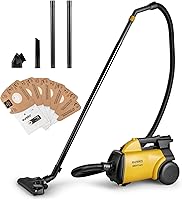
The Eureka 3670M weighs 8.6 lb and has a dust bag capacity of up to 2.5 liters. It includes 2 extension wands and 2 specialty attachments for reaching furniture, high corners, crevices and spaces under car seats.
Choose it when carrying and simple bag disposal are central to your decision. It makes sense for a cleaning route that includes floor edges, furniture and other small jobs between rooms.
The extension wands give you options for reach, but use only the length needed for the task. A shorter setup is easier to control beside a chair or inside a car.
Skip it as your default carpet choice if your main task is large areas of thick carpet. Choose around the floorhead requirements of that carpet rather than motor power alone.
It also won't suit buyers who want to avoid replacement bags. Keep compatible spares with the vacuum, and check the bag before starting a larger cleaning session.
Miele C1 Pure Suction: for hard floors with low-pile carpet
The Miele C1 Pure Suction is intended for hard floors and low-pile carpet. Its 6 suction settings let you adjust airflow for the surface, and it includes an SBD 365-3 combination floorhead.
The bagged AirClean system combines a FilterBag, motor protection filter and exhaust filter. A dusting brush, crevice tool and upholstery tool cover common above-floor jobs, with accessories clipped onto the vacuum.
Choose it for a home where wood, tile or similar hard surfaces make up most of the cleaning route. It also fits buyers who want to adjust suction rather than use the strongest setting for every task.
On a lightweight rug, use the rug's care guidance and reduce suction if the head becomes difficult to move. Lifting the rug with every stroke is a sign to change your approach.
Skip this configuration for carpet-first shopping when you need a motorized floor brush. Its intended floor mix is the reason to choose it, rather than expecting it to serve every carpet type.
Bissell Zing 2156A: for buyers who prefer emptying a cup
The Bissell Zing 2156A has a 2-liter dirt cup, washable and reusable filters, and a 15 ft retractable cord. Its 7.5 lb weight and integrated carrying handle suit buyers who need to move the body between cleaning areas.
Choose it if you want bagless collection and are willing to make cup and filter care part of the routine. Its floor tool switches between carpet and hard floors with a flip of a switch.
Plan outlet changes around the room layout rather than stretching the cord to its limit. Moving to a closer outlet is easier than working with the canister pulled tight against furniture.
Skip it if loose-dust disposal is the chore you most want to avoid. A reusable cup removes bag replacement, but it still needs emptying and cleaning.
Washable filters need enough drying time before reuse, so plan that care between cleaning sessions. For alternatives with the same collection style, see our best bagless canister vacuum guide.
Kenmore 81615: for pet hair across floors and furniture
The Kenmore 81615 combines bagged collection and pet-focused attachments, including a motorized Pet PowerMate. It also includes a Pop-N-Go floor brush, bare-floor tool, crevice tool, dusting brush and upholstery brush.
Its triple HEPA filter system, aluminum telescoping wand, onboard tool storage and 28 ft retractable cord support a cleaning route with several surfaces. Kenmore describes a 2-motor system for suction and brush rotation.
Choose it when pet hair on furniture is a regular job and you want tools stored with the machine. Use the small motorized attachment for suitable fabric surfaces and the appropriate floor nozzle for rooms.
Skip it if your main need is a simple vacuum for a small hard-floor space. The larger tool package is most useful when you regularly switch between floor and above-floor work.
If stair carrying is essential, confirm the full assembled weight before ordering. For a closer look at the package, see our Kenmore 600 Series 81615 review.
Are canister vacuums good for pet hair?
Yes, canister vacuums suit pet hair when the tool matches where the hair collects. Separate the job into hard floors, carpet and upholstery before choosing a model.
Loose hair on hard floors needs a suitable floor head and a clear airflow path. Hair held in fabric or carpet may need brush agitation, provided the surface's care instructions allow it.
For a household with both shedding pets and fabric furniture, a dedicated motorized attachment can be useful. The Kenmore's pet tool is the clearest match among these 4 models for that buying need.
Use shorter, controlled passes on upholstery instead of forcing a large floor head across cushions. Check seams and edges with an appropriate small tool, and avoid catching loose fabric.
Hair also becomes a maintenance task once it's inside the vacuum. Inspect brush rolls, tool openings and the dust collection area regularly so buildup doesn't restrict cleaning.
Our guide to whether canister vacuums are good for pet hair explains how to match tools to the places hair gathers.
How do you set up a canister vacuum for the first clean?
Start with the bag or cup, filters and connections, then choose a tool for the first surface. Read the model's instructions before assembly so you don't miss packing material or an incorrectly seated part.
A useful first-clean sequence is:
- Remove packing material and confirm the required filters are fitted.
- Seat the bag or dust cup correctly and close the body securely.
- Connect the hose, wand and chosen tool without forcing the fittings.
- Adjust the wand so you can stand comfortably.
- Choose the floor mode, brush setting or suction level for the surface.
- Place the body where it can follow without catching on furniture.
With an adjustable wand, aim for a comfortable arm position rather than the longest possible reach. You shouldn't need to bend over through every pass or hold your shoulder raised.
Begin on a clear area where you can learn how the body follows. Adjust your route before moving into a crowded space with several chair legs and corners.
For rugs, check the care label before engaging a rotating brush. If the head sticks, reduce suction or change the allowed setting rather than pushing harder.
How should you clean rooms and stairs with a canister?
Clean in planned sections, moving the body before the hose reaches its limit. This keeps the head easier to control and reduces pulling around corners.
For a room, clear cords and small objects first. Work across the open area in overlapping passes, then change to a smaller tool for edges and tight spaces.
Let the head travel steadily rather than rushing over debris. If something remains after repeated passes, inspect the head and airflow path instead of pressing down harder.
On stairs, place the body on a stable landing with enough hose reach for the section ahead. Don't balance it on a narrow tread or leave it where a pull could bring it down.
Keep loose hose and cord away from your feet. Move the vacuum to the next stable position before stretching to reach another step.
Use a tool that fits the tread and riser, and make separate carrying trips if needed. Our guide to vacuuming stairs with a canister vacuum walks through the job in more detail.
What care keeps a canister vacuum working properly?
Keep the dust collection area, filters and airflow path clear. Regular checks prevent a full bag, dirty filter or blocked tool from turning into a larger cleaning problem.
Unplug the vacuum before removing tangled hair, checking a blockage or opening parts for care. Follow the model's instructions for access and reassembly.
After a larger cleaning session
Check the bag or cup and remove visible debris from the head. Pay attention after collecting lots of pet hair or fine household dust, since either can build up quickly.
For bagless models, empty before debris reaches the maximum line. For bagged models, follow the replacement guidance and avoid compressing the dirt to make more room.
When suction drops
Check for a full collection area, dirty filters, a blocked tool or hose, and loose connections. Work through those causes before assuming the motor needs service.
Don't push a sharp object into a hose to clear it. Use the method allowed by the vacuum's instructions, and stop if you can't reach the blockage safely.
Before washing or storing parts
Wash only parts approved for washing and let them dry fully before reinstalling them. Never use the vacuum with a damp filter or missing required filter.
Store the hose without a tight kink and keep the wand where it won't fall across a doorway. Guide a retracting cord so the plug doesn't strike furniture or your hand.
Which buying and cleaning mistakes should you avoid?
Avoid choosing by motor power or attachment count alone. Floor suitability, comfortable handling and a realistic care routine matter more than a feature you won't use.
These mistakes are especially easy to make:
- Buying for occasional jobs first: Choose for the floors and messes you clean every week, then consider less frequent tasks.
- Confusing a pet tool with a floor powerhead: A small motorized attachment serves a different job from a full-size carpet nozzle.
- Assuming future tools will fit: Confirm connections and electrical compatibility before planning an upgrade.
- Ignoring storage: Leave room for the hose and wand as well as the body.
- Using maximum suction everywhere: Adjust it where possible when a rug lifts or a tool becomes hard to move.
- Dragging the canister by a stretched hose: Reposition the body before working farther away.
- Delaying filter care: Make maintenance part of the routine rather than waiting for a major loss of airflow.
- Collecting unsuitable debris: Keep liquids, hot ash and construction dust away from a household vacuum unless it is expressly designed for them.
Also check replacement part compatibility before your first bag or filter needs changing. A spare that fits the brand but not the model won't help when cleaning stops halfway through a room.
When is a canister vacuum the right choice?
A canister is a good choice when your routine mixes floors, furniture, edges and stairs. Its separate wand is especially useful when you change tools and reach around obstacles often.
It is less appealing if you dislike managing a trailing hose and body. For large, open carpeted spaces, consider whether an upright's connected layout better suits how you prefer to clean.
Limited storage can also decide the format. Choose a place for the whole setup before buying, and make sure taking it out won't require rearranging a closet each time.
A canister should make your most common jobs easier. Extra tools have little value if carrying or storing the machine makes you avoid using it.
Which canister vacuum should you buy?
Buy the canister vacuum that fits your main surface and your routine, then use the remaining features to settle close choices. Start with the job you do most often.
- Mostly hard floors with low-pile carpet: Choose the Miele C1 Pure Suction for that floor mix and adjustable suction.
- Frequent carrying with bagged disposal: Choose the Eureka 3670M if its floor tools suit your surfaces.
- Bagless collection with regular filter care: Choose the Bissell Zing 2156A if you're comfortable emptying a reusable cup.
- Pet hair across furniture and floors: Choose the Kenmore 81615 if you'll use its motorized pet attachment and broader tool package.
If thick carpet dominates your home, settle the full-size floorhead requirement before choosing among models. Don't let a light body or appealing dust collection style outweigh the tool your carpet needs.
For more choices, browse our best canister vacuum picks. If the Miele fits your floor mix but you're comparing configurations, use the Miele canister vacuum models guide to narrow the package.
Frequently asked questions
What is a canister vacuum?
A canister vacuum has a separate body containing the motor and dust collection system, connected to a hose, wand and cleaning head. You guide the head while the body rolls behind you; the same hose can accept smaller tools for furniture, corners and other above-floor jobs.
Are canister vacuums good for carpet?
Yes, a canister vacuum can suit carpet when its floor head matches the pile and the carpet's care instructions. A suction-only head suits some low-pile surfaces, while thicker carpet often benefits from a motorized brush; check floorhead type, brush controls and height adjustment before choosing a model.
Should I buy a bagged or bagless canister vacuum?
Choose bagged collection if you prefer removing a filled bag instead of emptying loose dirt from a cup; choose bagless collection if you want to avoid replacement bags and will clean the cup and filters regularly. Both designs need filter care, and compatible replacement parts should be easy to find.
Is a canister vacuum easier to carry upstairs?
A light canister can suit stair cleaning, but carrying the body, hose and tools still takes planning. Choose a weight you can lift comfortably, keep one hand available for the rail and make separate trips if needed; place the body on a stable landing rather than balancing it on a step.
What should I check before buying a canister vacuum?
Check floorhead suitability first, followed by carrying weight, dust disposal, reach and tool storage; match the attachments to jobs you do often, such as upholstery or stair edges. Confirm replacement bag and filter compatibility, and measure the storage space needed for the body, hose, wand and head.