Are Canister Vacuums Good for Carpet?
Yes, a canister vacuum for carpet works well when its floorhead suits the pile and care instructions. Choose a motorized brush for routine carpet cleaning, unless your carpet requires suction without a rotating brush.
On this page (8 sections)
- What type of canister floorhead works best on carpet?
- How should you match the vacuum to carpet pile?
- Which canister vacuums suit different carpet-cleaning needs?
- Which practical features should decide your purchase?
- How should you set up and vacuum carpet with a canister?
- What care and common mistakes affect carpet cleaning?
- When should you choose an upright instead?
- How do you choose your canister vacuum for carpet?
Yes, a canister vacuum for carpet can be a good choice when its floorhead matches your carpet's pile and care instructions. For routine wall-to-wall cleaning, a motorized brush is a useful starting point because it agitates fibers while suction carries debris away.
The main buying decision is the tool touching the floor. Then consider how often you'll carry the body, empty the bin, and switch between carpet, rugs, and bare floors.
What type of canister floorhead works best on carpet?
A motorized floorhead suits many carpeted rooms, while suction-only tools suit carpets and rugs that require gentler care. Choose the head around your flooring rather than the vacuum's wattage or suction number.
There are 3 main types:
- Electric powerhead: A motor drives the brushroll, giving it brush action that doesn't rely on airflow to turn.
- Air-driven turbo head: Airflow spins the brushroll, so restricted airflow can affect its rotation.
- Suction-only head: No rotating brush contacts the fibers, making it an option where the carpet maker prohibits brush agitation.
A handheld turbo brush serves a different job from a full-size carpet head. It's useful for upholstery or small areas, but shouldn't be your main tool for a room of carpet.
Does a canister vacuum for carpet need an electric connection?
A canister needs the correct electrical connection to run an electric powerhead. The body, hose, wand, and head must form a compatible system, so buying a suction-only machine and adding a powered head later may not be practical.
Choose a package with the required carpet head included. Our guide to what a powerhead is on a canister vacuum explains the parts to check.
How should you match the vacuum to carpet pile?
Match the vacuum to the carpet's care instructions first, then its pile height and density. A short carpet can still have loops or fibers that need special treatment.
For low-pile carpet, consider the debris you collect. Loose crumbs may need little agitation, while hair caught among fibers makes an approved rotating brush more useful.
For medium-pile carpet, prioritize a suitable brush head and controls that let you keep it moving comfortably. Maximum suction isn't the goal if the head grips the carpet so tightly that you can't guide it.
What matters most for high-pile carpet?
For high-pile carpet, confirm floorhead suitability before buying. Neither a powerful motor nor a carpet label establishes that a head will move comfortably through long, dense fibers.
Check for any required height adjustment or suction setting in the floorhead instructions. Don't assume the models below include every adjustment your carpet needs.
For fringe, loose threads, or delicate rugs, keep rotating brushes away from vulnerable edges. Follow the rug maker's care directions even if a different setting seems quicker.
Which canister vacuums suit different carpet-cleaning needs?
Choose the Eureka for adjustable suction and a lighter body among these picks, the Kenmore for brushroll hair management, or the Miele for separate carpet, hard-floor, and upholstery tools. All 3 are bagless, so consider bin emptying as part of the routine.
Eureka Carpet and Pet: for mixed floors and fewer carrying pounds
The Eureka suits shoppers who want a motorized brush and stepless suction control without carrying the heaviest body in this group. It weighs 16.5 lb and has a 2 L dustbin.
The suction knob gives you a way to ease the head's grip when moving onto a rug that permits brush cleaning. Its swivel steering also helps when working around furniture legs.
The 17 ft retractable cord makes outlet placement worth checking before you buy. In a broad room, plan where the body will sit so the cord and hose don't limit each pass.
Skip it if you want sealed-bag disposal or can't manage a canister of this weight on your stairs. Its washable filters also require time to dry fully before reuse, according to the care instructions.
Kenmore 500 Hair Eliminator: for homes with frequent hair cleanup
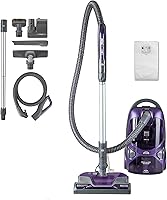
The Kenmore suits households where hair wrapping around the brushroll is a regular chore. Kenmore says its Hair Eliminator removes hair automatically, reducing the need to cut it away by hand.
It has a 2-motor system, a telescoping wand, and a detachable handle for furniture and tight spaces. The 24 ft auto-rewind cord gives you more distance from an outlet than the Eureka.
The trade-off is a 19.2 lb body and a 1.2 L dust cup. Choose it for the hair-management feature, but expect to watch the fill level during debris-heavy cleaning.
Skip it if carrying weight is your main concern or you prefer a larger bin. Automatic hair removal also doesn't replace checking the head for thread, obstructions, and wear.
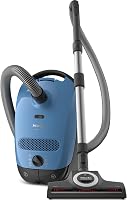
Miele Blizzard CX1 Cat and Dog: for carpet plus upholstery and hard floors
The Miele suits homes needing distinct tools for carpet, bare floors, and pet hair on furniture. It includes the SEB 228 Electro Plus Floorhead, SBB 300-3 Parquet Twister Floorhead, and a handheld turbo brush.
Its 4 suction settings let you adjust airflow for different cleaning tasks. The upholstery tool, crevice tool, and dusting brush add options beyond the main floorheads.
Choose it if you'll use those attachments regularly and have space to keep them accessible. The handheld turbo brush is especially relevant when fur collects on seating as well as carpet.
Skip it if you mainly clean one small carpeted room or need a body that's easy to carry upstairs. At 19 lb, it still requires a careful lifting plan.
For more attachment-focused choices, see our canister vacuum with powerhead guide.
Which practical features should decide your purchase?
After floorhead suitability, prioritize carrying weight, cleaning reach, and disposal. These affect every cleaning session more directly than a long accessory list you'll rarely use.
Measure the path from your usual outlet to the far side of the room. Cord length and usable hose reach are separate limits, and neither should require pulling the machine by its cord.
For mixed flooring, think about where you'll store the spare head. Our guide to canister vacuums for hardwood floors covers the other half of that choice.
If emptying a dust cup is a task you dislike, compare bagged designs before settling on these picks. Our broader canister vacuum guide helps you compare options beyond these carpet-focused models.
How should you set up and vacuum carpet with a canister?
Start with the approved head and recommended settings, then make slow, overlapping passes. Rushing gives the brush and airflow less time to work through each strip of carpet.
Before the first room, follow this sequence:
- Pick up coins, cords, and small objects, and move loose fringe out of the cleaning path.
- Fit the hose, wand, and head securely, then confirm the bin and filters are seated.
- Select the carpet setting and any head-height adjustment the instructions require.
- Check movement on a small area, reducing suction or changing approved settings if the head grips too tightly.
Work away from the outlet and reposition the body before the hose pulls taut. Keep the hose clear of furniture corners rather than dragging the canister around them.
On stairs, place the body on a stable surface and work within comfortable reach. Our guide to vacuuming stairs with a canister explains positioning and tool use.
What care and common mistakes affect carpet cleaning?
Keep the air path and brushroll clear, and stop when the vacuum's sound or movement changes. More suction won't solve a blocked hose or a brush tangled with thread.
Empty the bin before debris reaches its fill limit. Follow the instructions for filter cleaning and replacement, and reinstall washable parts only when fully dry.
Switch off and unplug the vacuum before clearing the brushroll or inspecting a blockage. Even a hair-management brush needs routine checks around its ends and openings.
Avoid these common mistakes:
- Forcing a stuck head: Stop and adjust the approved settings rather than pushing harder.
- Using one tool everywhere: Switch attachments when the next surface needs different care.
- Vacuuming damp carpet: Wait until it is dry unless the machine is specifically designed for wet pickup.
- Ignoring sudden loss of pickup: Check the bin, filters, hose, and head before continuing.
For recurring fur cleanup, our guide to canister vacuums for pet hair explains which features deserve attention.
When should you choose an upright instead?
Choose an upright if you prefer one connected machine for large, open carpeted rooms. A canister makes more sense when moving a separate wand around furniture and switching tools fits your routine.
Consider storage as well as cleaning: the body, hose, wand, and spare head all need a place. Compare the layouts in canister vs upright vacuums for stairs if your home spans several floors.
How do you choose your canister vacuum for carpet?
Choose your canister vacuum for carpet by its hardest regular job. Pick the Eureka for adjustable suction and a lighter body among these 3, the Kenmore for frequent hair cleanup, or the Miele for separate floor and furniture tools.
For high-pile or delicate carpet, confirm the floorhead's suitability before committing to any model. If none matches your flooring requirements, compare the best canister vacuums with a powerhead using those requirements as your filter.
Frequently asked questions
Are canister vacuums good for carpet?
Yes, canister vacuums work well on carpet when their floorheads suit the pile and care instructions. For wall-to-wall carpet, start with a model that includes a compatible motorized brush, then check suction controls and carrying weight; delicate rugs may need suction without a rotating brush.
Do you need a powerhead for carpet?
A powerhead is a useful choice for routine cleaning of many carpets, especially where dirt and hair settle into the fibers. It isn't required for every rug or carpet; follow the carpet maker's guidance, since some materials and looped constructions need gentler suction or restrictions on rotating brushes.
Can you use a canister vacuum on high-pile carpet?
Yes, if the floorhead is suitable for that pile and moves without excessive force. Check both the carpet's care instructions and the vacuum's floorhead guidance before buying; use approved height and suction settings, and stop if the head stalls, pulls fibers, or seals tightly against the carpet.
Is a suction-only canister vacuum good for carpet?
A suction-only canister can suit some low-pile carpets and rugs, especially when their care instructions prohibit rotating brushes. It relies on airflow rather than brush agitation to lift debris; for a home with extensive carpet, choose it only after confirming that this cleaning method suits the carpet and your usual debris.