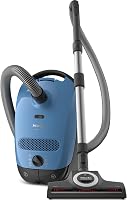
10 Best Canister Vacuum (October 2026)
The best best canister vacuum picks include the Eureka 3670M for frequent stair cleaning, the Miele C1 Turbo Team for mixed-floor homes, and the Miele C1 Pure Suction for mostly hard floors.
On this page (9 sections)
- How we chose the best canister vacuums
- The best canister vacuum picks for different homes
- How should you match the floorhead to your home?
- Is bagged or bagless easier to live with?
- How much do carrying, reach and storage matter?
- How should you set up and use a canister vacuum?
- Which care mistakes reduce cleaning performance?
- Related canister vacuum guides
- Which best canister vacuum should you choose?
The Eureka 3670M is our top pick for the best canister vacuum when you want a light bagged machine for floors, stairs and smaller cleaning jobs. Choose the Miele C1 Turbo Team for hard floors mixed with low to medium pile carpet, or the Kenmore 81615 for its motorized pet-hair tool.
Your floorhead matters more than a large motor number. Match it to your carpet and hard floors, then decide how much weight you can carry and how you want to empty the dirt.
New to this layout? Start with what canister vacuums are and which one to buy.
Our picks at a glance
-
1

-
2

-
3

How we chose the best canister vacuums
We compared floorhead fit, carry weight, dust collection, reach and useful attachments. The order favors practical whole-home use, while each badge identifies a narrower reason to choose that model.
A higher score doesn't override your floor needs. A light canister can be the right choice for stairs, while a heavier model with the right brush can make more sense for a carpeted home.
| Product | Best for | Weight | Bag capacity | Included tools | Our score |
|---|---|---|---|---|---|
| Eureka 3670M | frequent stair cleaning | 8.6 lb | 2.5 L | Brush, crevice tool and nozzle | 9.2 |
| Miele C1 Turbo Team | mixed-floor homes | 13 lb | 4.5 qt | 9.1 | |
| Miele C1 Pure Suction | mostly hard floors | 12 lb | 4.76 qt | 8.8 | |
| Miele Blizzard CX1 Turbo Team | bagless mixed-floor cleaning | 19 lb | 8.6 | ||
| Kenmore 81414 | varied cleaning heights | 22.6 lb | 2.8 L | 8.5 | |
| Miele Guard M1 Parquet XL | large hard-floor rooms | 14.8 lb | 4.5 L | 8.4 | |
| Bissell Zing 2156A | small bagless households | 7.5 lb | 8.3 | ||
| Kenmore 81615 | pet-covered furniture | 8.2 | |||
| Eureka Hardwood Bagless | everyday floor switching | 13.2 lb | Crevice tool and dusting brush | 8.1 | |
| Kenmore 500 Hair Eliminator | hair-heavy floor cleaning | 19.2 lb | 7.4 |
The best canister vacuum picks for different homes
Choose the Eureka 3670M for easy carrying, then look further down the list if dedicated carpet heads, bagless disposal or pet tools matter more. Each review explains the buyer fit and the main reason to skip that model.
Eureka 3670M: Best for frequent stair cleaning
- 8.6 lb weight
- 2.5 L dust bag
- Two extension wands
- Brush, crevice tool and nozzle
A light bagged choice for carrying between floors and cleaning beyond the floorhead. Extension wands and small tools cover furniture, corners and car interiors.
Pros
- Light body for carrying
- Replaceable dust bag
- Tools for furniture and tight spaces
Cons
- Needs replacement bags
- 90 dB noise level
The Eureka 3670M suits people who move the vacuum between floors and use small attachments as often as the floorhead. Its 8.6 lb body is easier to carry than most picks here, and the replaceable bag keeps collected debris together for disposal.
The 2 extension wands help with high corners and reaching beneath furniture. Use the crevice tool for narrow gaps, then switch to the brush for suitable furniture surfaces rather than trying to fit the floor nozzle everywhere.
Its 2.5 L bag makes this a useful general cleaner for smaller jobs around the house. Keep spare bags ready so a full bag doesn't interrupt your cleaning routine.
Skip it if your main buying reason is a dedicated turbo carpet head or motorized pet-hair attachment. For those needs, compare the Turbo Team or Kenmore 81615, plus our canister vacuum picks for pet hair.
Miele C1 Turbo Team: Best for mixed-floor homes
- TurboTeQ floorhead
- Parquet floorhead
- Six suction settings
- Three-tier AirClean filtration
Separate carpet and hard-floor heads suit homes where both surfaces need regular attention. Choose it for hard floors and low to medium pile carpet.
Pros
- Dedicated heads for two floor types
- Six suction settings
- Three-tier AirClean filtration
Cons
- Requires floorhead changes
- Intended for low to medium pile carpet
The Miele C1 Turbo Team is the clearest fit for a home where hard floors and low to medium pile carpet both need regular cleaning. Its separate floorheads let you choose the tool for the surface instead of asking one head to handle every room.
Use the TurboTeQ on suitable carpet and the Parquet head on hard floors. Plan to change heads at room boundaries, especially if your cleaning route moves back and forth between flooring types.
Six suction settings give you room to adjust when a head drags or an upholstery tool grips fabric too firmly. The dusting, crevice and upholstery tools also make this a useful choice for furniture and edges.
Choose it when carpet care justifies keeping a second floorhead within reach. Skip it for a nearly all-hard-floor home that needs only a combination head, and use our guide to Miele vacuum models to compare the range.
Miele C1 Pure Suction: Best for mostly hard floors
- Combination floorhead
- Six suction settings
- Three-tier AirClean filtration
- Dusting, crevice and upholstery tools
A combination floorhead makes sense for hard floors with some low pile carpet. Small tools handle furniture and edges without adding a separate carpet head.
Pros
- One combination floorhead
- Six suction settings
- Dusting and upholstery tools included
Cons
- Needs replacement bags
- Intended for low pile carpet
The Miele C1 Pure Suction suits homes dominated by hard floors, with some low pile carpet. Its combination floorhead keeps the floor-cleaning setup simpler than the Turbo Team's two-head arrangement.
This is a sensible match when carpet is a small part of your home rather than the main surface. The included upholstery, dusting and crevice tools let you move from floors to sofa seams, shelves and baseboards.
Use the suction adjustment to keep smaller tools moving freely. More suction isn't always useful if the nozzle sticks to fabric and makes each pass harder.
Skip this model if medium pile carpet covers much of your home or a turbo brush is central to your buying plan. Our Miele C1 Turbo Team review covers the alternative, while the Pure Suction versus Turbo Team comparison helps you decide whether the extra floorhead suits your rooms.
Miele Blizzard CX1 Turbo Team: Best for bagless mixed-floor cleaning

- Bagless dust bin
- Four suction settings
- TurboTeQ and Parquet floorheads
- HEPA Lifetime Filter
This bagless Miele pairs a turbo carpet head with a Parquet Twister for hard floors. It suits buyers who prefer emptying a bin and can manage a heavier body.
Pros
- No replacement dust bags
- Two surface-specific floorheads
- HEPA Lifetime Filter
Cons
- Heavier than the bagged C1 models
- Bin needs regular emptying
The Miele Blizzard CX1 Turbo Team suits buyers who want separate heads for hard floors and low to medium pile carpet without replacement dust bags. It combines a TurboTeQ carpet head and Parquet Twister with a reusable dirt bin.
Its Click2Open system handles bin opening, and Miele describes the design as reducing fine-dust clouds during emptying. Still, empty close to the trash container and avoid dropping debris from a height.
Four suction settings help you adjust for different tasks. The HEPA Lifetime Filter is another reason to consider it, but filter features don't remove the need to keep the bin and airflow passages clear.
The main reason to skip it is carrying weight: its 19 lb body is less appealing for frequent trips upstairs. Choose it for a mostly single-level cleaning route where bagless disposal matters more than a light canister.
Kenmore 81414: Best for varied cleaning heights

- 2.8 L dust bag
- Sealed HEPA filtration system
- 9.5 ft cleaning reach
- 26 ft retractable cord
Height adjustment, variable suction and an extended wand suit homes with several cleaning surfaces. Its heavier body makes it a better fit where frequent carrying is unnecessary.
Pros
- Four height settings
- Sealed HEPA air path
- Bag and clog performance indicator
Cons
- Heavy for frequent stair carrying
- Needs replacement bags
The Kenmore 81414 suits a home with varied cleaning heights and surfaces, especially when the canister can stay on one level. Its height adjustment and variable suction give you separate ways to adapt the cleaning setup.
The telescoping wand provides 9.5 ft of cleaning reach for higher areas. Shorten it for furniture work so you aren't steering a long wand around lamps, chair legs and narrow corners.
Kenmore specifies a sealed HEPA air path, while the performance indicator helps flag a full bag or possible clog. If airflow drops, check those causes before raising suction or making repeated passes.
Its 26 ft retractable cord is useful across connected rooms, but the 22.6 lb body makes frequent carrying a drawback. Skip it if stairs dominate your routine or if you specifically want the separate motorized pet tool included with the Kenmore 81615.
Miele Guard M1 Parquet XL: Best for large hard-floor rooms

- Parquet Twister XL floorhead
- AllTeQ universal floorhead
- Four suction levels
- AirClean Plus filter
The wide parquet head and long operating radius suit open hard-floor spaces. An AllTeQ head covers low-pile carpet, but this model cannot use Miele electric floorheads.
Pros
- Wide hard-floor brush
- Foot-controlled suction adjustment
- Integrated small tools
Cons
- Not compatible with Miele electric floorheads or accessories
- Less suited to carpet-focused buying
The Miele Guard M1 Parquet XL suits larger rooms with open hard-floor areas. Its wide parquet brush makes the most sense where there is space for broad passes, rather than many tight gaps between furniture.
The AllTeQ universal head handles transitions to low-pile carpet. A foot-controlled mode button changes suction, and the adjustable wand lets you set a working height that avoids bending through each pass.
Its 36 ft operating radius describes overall cleaning reach, not cord length alone. Plan your outlet location around that distinction rather than expecting the power cord itself to span the full distance.
Choose it when hard floors drive the decision and the integrated small tools suit your furniture cleaning. Skip it if you expect to add an electric carpet head later: it isn't compatible with Miele electric floorheads or accessories, so buy for the floors you need to clean now.
Bissell Zing 2156A: Best for small bagless households

- 2 L dirt cup
- Washable, reusable filters
- Carpet and hard-floor switch
- 15 ft retractable cord
The lightest pick here suits smaller spaces and buyers who prefer a dust cup. Allow time to wash and fully dry its reusable filters.
Pros
- Light body with carrying handle
- No replacement dust bags
- Washable, reusable filters
Cons
- Short cord for large rooms
- Filter washing requires drying time
The Bissell Zing 2156A is a good match for smaller homes where easy carrying and bagless disposal come first. At 7.5 lb, it is the lightest option in this group.
The floor switch changes between carpet and hard-floor cleaning. Its telescopic wand and small tools help with edges and furniture, making it useful when storage space favors one compact machine for several tasks.
Its washable filters reduce the need for disposable filter supplies, but you need time and space for them to dry fully. Plan filter care after a cleaning session rather than just before you need the vacuum.
Skip it for large rooms with few outlets, since the 15 ft cord means more outlet changes than the longer-cord picks. It also isn't the choice here for buyers whose main need is a dedicated motorized pet-hair attachment.
Kenmore 81615: Best for pet-covered furniture

- Pet PowerMate motorized attachment
- Pop-N-Go bare-floor brush
- Triple HEPA filter system
- 28 ft retractable cord
A motorized Pet PowerMate attachment makes this a focused choice for hair on furniture and carpet. The Pop-N-Go brush handles bare floors, with tools stored onboard.
Pros
- Motorized pet-hair attachment
- Pop-N-Go bare-floor brush
- Onboard tool storage
Cons
- Needs replacement bags
- Tool changes between cleaning tasks
The Kenmore 81615 suits homes where pet hair collects on upholstered furniture as well as floors. Its Pet PowerMate motorized attachment addresses a different job from simply running a floor nozzle over loose hair.
Kenmore says that attachment lifts stubborn hair and helps prevent tangles around its brush. Use it only on suitable surfaces, checking the furniture care instructions before applying a rotating brush to delicate fabric.
The Pop-N-Go bare-floor brush and onboard tools support a cleaning route that moves from carpet to hard floors and then furniture. Keep the needed attachment ready so tool changes don't leave half the sofa unfinished.
Choose it when those repeated pet-hair jobs justify a broader tool set. Skip it if your home is mostly bare flooring with little upholstery cleaning, where a simpler head and lighter body may matter more than the extra attachments.
Eureka Hardwood Bagless: Best for everyday floor switching

- 2 L dust cup
- HEPA filter
- Adjustable suction knob
- Hard-floor and carpet modes
A foot-operated floor switch and adjustable suction suit routine cleaning across hard floors and carpet. Its washable cup and filter need regular care.
Pros
- Foot-operated floor mode switch
- Adjustable suction
- Washable dust cup and filter
Cons
- Heavier than the Bissell Zing
- 80 dB noise level
The Eureka Hardwood Bagless suits routine cleaning across hard floors and carpet when you prefer a reusable cup. Its foot-operated floor switch makes changing surface modes convenient during a room-to-room clean.
An adjustable suction knob helps when a nozzle grips too firmly. Start with a setting that lets the head move freely, then increase it as needed instead of choosing maximum suction for every surface.
The washable cup and filter make regular cleaning possible without replacing a dust bag. Empty hair and debris before they pack tightly, and follow the care instructions for washing and drying.
Choose it if the crevice tool and dusting brush cover your smaller jobs. Skip it when low carry weight is the deciding factor, and use our hardwood-floor canister vacuum guide if protecting hard surfaces is your main concern.
Kenmore 500 Hair Eliminator: Best for hair-heavy floor cleaning

- Hair Eliminator brushroll
- 1.2 L dust cup
- HEPA filtration
- 24 ft retractable cord
Choose this bagless model when brushroll hair removal matters more than a large dust cup. It suits regular floor cleaning with frequent emptying.
Pros
- Automatic brushroll hair removal feature
- HEPA filtration
- Retractable cord
Cons
- Smallest bagless cup in this group
- Heavy for frequent carrying
The Kenmore 500 Hair Eliminator suits buyers who want a bagless floor cleaner with a feature aimed at brushroll hair buildup. Kenmore's Hair Eliminator feature is designed to remove hair automatically from the brushroll.
That feature doesn't replace checking the head for obstructions. Threads, large debris and blocked openings still need attention, with the vacuum unplugged before you inspect them.
Its 1.2 L cup is the smallest bagless container here, so this is a better fit for regular short cleans than for buyers who want fewer emptying stops. Its 19.2 lb weight also deserves attention if you carry the body often.
Choose it when hair management at the floorhead is your priority. Skip it if you mainly need a separate motorized tool for sofa cushions, or if a larger cup and lower carry weight would save more effort in your routine.
How should you match the floorhead to your home?
Choose the head your main floor needs, then check whether the secondary head or tools cover the remaining rooms. Motor size and suction figures shouldn't lead this decision.
Which best canister vacuum pick suits your carpet?
The Turbo Team models suit low to medium pile carpet, while the Pure Suction and Guard M1 suit hard floors and low-pile carpet. Don't extend those recommendations to thick pile simply because a machine has adjustable suction.
A turbo brush uses airflow to turn its brush, while an electric powerhead uses a motor. A motorized furniture attachment is a separate tool and shouldn't be treated as proof of the same setup at the main floorhead.
For a carpet-heavy home, compare the actual head and carpet care requirements before choosing. Our guide to a canister vacuum with a powerhead explains the feature, and our carpet suitability guide covers the floor-matching decision.
What matters on hard floors and delicate rugs?
Use a suitable hard-floor head and keep its underside free of grit. A trapped pebble or dirty wheel can drag across the surface even when the brush itself is appropriate.
For delicate rugs, follow the rug maker's care instructions before using a rotating brush. Reduce suction if the head grips, and clean toward the edge without drawing fringe into the nozzle.
Is bagged or bagless easier to live with?
Choose bagged for contained disposal and bagless if you prefer emptying a reusable cup. The easier option is the one whose care routine you will follow.
With bags, check the fill indicator or airflow and keep the right replacements nearby. Fine dust can restrict airflow before a bag looks packed, so don't judge only by how full it feels.
With a cup, empty before debris reaches the fill line and clean the filters as directed. Avoid tapping dusty filters indoors or assuming every filter can be washed.
A HEPA filter and a sealed air path describe different parts of dust control. Don't assume a HEPA filter label alone means the whole machine has a sealed system.
For disposal and upkeep tradeoffs, read our bagged versus bagless canister vacuum guide. Remember that bagless removes bag changes, not maintenance.
How much do carrying, reach and storage matter?
Carry weight matters most on stairs, while reach and storage shape everyday use on one floor. Think through your normal cleaning route before comparing measurements.
Cord length, hose length, wand reach and operating radius aren't interchangeable. A long cord helps between outlets, while a wand helps reach higher areas without moving the body as often.
Measure the storage spot for the canister, hose, wand and spare floorhead. A body that fits in a closet can still leave a bulky hose across the doorway.
For stairs, keep the body on a stable surface and reposition it before the hose becomes taut. Don't balance it on a narrow tread or pull it upward by the hose.
Our guide on how to vacuum stairs with a canister explains a safer cleaning route. If you can't carry a model comfortably, a longer wand doesn't solve that problem.
How should you set up and use a canister vacuum?
Check the bag or cup, filters and connections before the first clean, then select the right head and adjust the wand. A secure, clear airflow path is the starting point for useful suction.
Follow the manual when fitting bags and filters, and make sure the compartment closes without force. Confirm that hose and tool connections are seated before pulling the body around furniture.
Pick up coins, cords, sharp pieces and large scraps first. Keep these household vacuums away from wet spills and renovation debris unless the manual expressly permits those materials.
Set the wand so your shoulders stay relaxed and the head rests flat. Work in slow, overlapping passes rather than pressing hard or rushing repeatedly over the same strip.
Move around furniture corners so the hose doesn't scrape across them. Reposition the canister when it catches instead of tugging harder.
When retracting a cord, guide the plug back with your hand. Letting it whip toward the body can strike furniture or your feet.
Which care mistakes reduce cleaning performance?
Restricted airflow and neglected floorheads are the first things to check when pickup drops. Stop and inspect the vacuum instead of compensating with more passes.
- Replace a full bag or empty the cup before debris packs tightly.
- Check the hose, wand and head for blockages with the machine unplugged.
- Remove visible hair and thread as directed, even with a hair-management feature.
- Wash only parts approved for washing, and let them dry completely before refitting.
- Check filter replacement instructions rather than waiting for a visible layer of dirt.
Never operate with a missing filter or a damp filter. Keep a spare dry filter only if the correct replacement is available and the manual allows that routine.
Avoid diagnosing a stuck floorhead as weak suction. Check the surface mode, suction setting and height adjustment, where available, before making another pass.
Related canister vacuum guides
Choose a focused guide for your main cleaning job if two models still seem equally suitable. Pet tools, floorheads and disposal preferences usually settle the choice.
- Best canister vacuum for pet hair
- Best canister vacuum for hardwood floors
- Best canister vacuum with a powerhead
- Best bagged canister vacuum
Which best canister vacuum should you choose?
Choose the best canister vacuum for your hardest recurring job. Start with your main floor surface, then use carrying and disposal preferences to make the final cut.
Pick the Eureka 3670M for frequent carrying and bagged collection. Choose the Miele C1 Turbo Team when separate hard-floor and carpet heads will get regular use, or the Pure Suction when hard floors dominate.
For pet hair on furniture, favor the Kenmore 81615's motorized attachment. For a light bagless machine in smaller rooms, choose the Bissell Zing; for open hard-floor spaces, consider the Guard M1 Parquet XL.
Use our canister vacuum guide for broader selection advice. If contained dust disposal settles the choice, narrow your shortlist with the bagged canister vacuum picks.
Our top 3 picks at a glance
-
1
-
2
-
3
Frequently asked questions
What is the best canister vacuum for most homes?
The Eureka 3670M is our top pick when low carry weight and bagged dust collection matter most. Floor type can change that choice: the Miele C1 Turbo Team suits hard floors mixed with low to medium pile carpet, while the Kenmore 81615 adds a motorized tool for pet hair.
Should you choose a bagged or bagless canister vacuum?
Choose bagged if you prefer removing collected dirt in a replaceable bag. Choose bagless if you prefer a reusable cup and will keep up with emptying and filter care; a washable filter must dry fully before refitting, and a bagless design still needs regular maintenance.
Which canister vacuum is best for carpet?
The Miele C1 Turbo Team is our strongest match here for homes with low to medium pile carpet and hard floors. Its turbo carpet head serves a different role from a motorized upholstery tool; for thick carpet or delicate rugs, check the floorhead requirements set by the carpet maker.
What should you compare when buying a canister vacuum?
Compare floorhead fit first, followed by carry weight, dust disposal, reach and storage. Check whether pet hair collects mainly on floors or furniture, since those jobs can need different tools; also distinguish cord length from operating radius, which includes more of the vacuum's total reach.