Bagged vs Bagless Canister Vacuum: Which Is Better? (October 2026)
Choose a bagged canister vacuum if you prefer removing collected dirt inside a replaceable bag. Choose bagless if avoiding bag purchases matters more and you're willing to empty a bin and follow its filter-care routine.
On this page (9 sections)
- Bagged vs bagless canister vacuum: what changes in daily use?
- Which type is easier to empty?
- Does bagged or bagless work better on floors?
- Which canister vacuum fits your needs?
- Which style takes less ongoing care?
- Is bagged or bagless easier to carry and store?
- How should you set up a canister before the first clean?
- Which buying and care mistakes should you avoid?
- What should you choose: bagged or bagless?
Choose a bagged canister vacuum if you prefer removing dirt inside a replaceable bag; choose bagless if avoiding bag purchases matters more than emptying a reusable bin. The better choice is the disposal routine you'll keep up with.
For these 3 models, the Eureka 3670M suits bag buyers, the Eureka Whirlwind suits people who want a light bagless machine, and the Miele Blizzard CX1 Turbo Team suits mixed-floor homes that can accommodate a heavier canister.
Start with your floors and carrying needs, then choose how you want to handle the dirt. A convenient container won't make up for the wrong floorhead or a body you struggle to lift.


Bagged vs bagless canister vacuum: what changes in daily use?
The main difference is where the dirt goes and how you remove it. A bagged vacuum collects debris in a disposable bag, while a bagless machine separates it into a reusable container.
With a bagged model, you keep spare bags and replace the full one. With bagless, you take the bin to the trash, empty it and return it to the vacuum.
Neither system removes all cleaning chores. Hoses can clog, hair can collect around brushes, and filters need the care set out in the manual.
Think about your usual cleaning job, too. A quick pass through a small apartment creates a different upkeep routine from collecting hair, crumbs and dust across several rooms.
Don't choose bagless solely to remove a shopping task. You also need a suitable place to empty the bin and, for washable filters, somewhere they can dry fully.
Which type is easier to empty?
A bagged model suits people who want less handling of loose dirt, while bagless suits people comfortable tipping debris into the trash. Your trash area matters almost as much as the release mechanism.
A bag keeps collected debris together during removal, though you should still handle it gently. Pulling or squeezing a full bag can spill dirt, especially if it catches on the compartment.
For a bagless bin, hold the opening low inside a trash bag before releasing the contents. Avoid shaking it from above the trash can, which gives fine dust more room to spread.
Hair can bridge across a container instead of falling out neatly. Switch off and unplug the vacuum before clearing trapped debris, using the method in its instructions.
Keep the container's rim and closing surfaces clear before putting it back. Dirt caught around a lid can stop it from closing properly.
When a bagged canister vacuum makes disposal simpler
Choose bags if you want to remove the dirt and its container together. That can be a useful routine when you dislike seeing or handling the debris collected during cleaning.
Keep a spare bag beside your cleaning supplies rather than waiting until the vacuum needs one. Running out can interrupt a job even when the rest of the machine is ready.
Bagless makes more sense if you prefer a reusable container and can empty it without rushing. It rewards a regular disposal habit rather than waiting for the bin to become tightly packed.
Does bagged or bagless work better on floors?
Choose the floorhead and surface fit first, because bag style doesn't decide how a tool handles your carpet or hard floor. A household with mostly bare floors needs a different setup from one with carpet throughout.
On hard floors, use the appropriate floor setting or attachment and keep its underside clean. A trapped piece of grit can be dragged across the surface as you move.
For rugs and carpet, consider pile height and the kind of brush action needed. A head that becomes hard to push may need a different suction setting or tool, rather than more force.
A turbo brush and an electric powerhead are different tools, so don't treat the names as interchangeable. Read what a powerhead on a canister vacuum does before choosing a machine for carpet.
For a carpet-heavy home, our guide to canister vacuums with a powerhead helps narrow the floorhead choice. For mostly bare floors, use our hardwood floor canister vacuum guide.
If your home has delicate rugs, follow the rug's care directions before using a rotating brush. Floor compatibility should settle the shortlist before dust disposal settles the final choice.
Which canister vacuum fits your needs?
Choose the Eureka 3670M for bag changes, the Whirlwind for light bagless cleaning, or the Miele for its separate floorheads and suction settings. Each fits a different daily routine.
Eureka 3670M: choose it for frequent carrying and bag changes
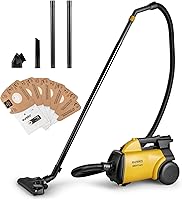
The Eureka 3670M is the choice here for someone who wants bagged collection without a heavy canister. It weighs 8.6 lb, and its bag holds up to 2.5 L.
Its 2 extension wands and 2 specialty attachments support jobs beyond open floors, such as furniture, corners and car interiors. Group those tasks into one session so you spend less time changing tools and putting them away.
Choose it if you'll carry the vacuum between rooms or floors and prefer replacing a bag to cleaning out a cup. It also suits someone who wants one canister for floors and smaller above-floor jobs.
Skip it if avoiding replacement bags is your main goal. For a home dominated by thick carpet, settle the floorhead requirement before choosing it simply for its weight.
Our Eureka 3670M review gives this bagged option a closer look.
Eureka Whirlwind: choose it for a light bagless routine
The Whirlwind suits someone who wants bagless collection in a light body and accepts regular filter rinsing. Its automatic cord rewind also helps when putting the machine away after short jobs.
The handle has airflow control, and the integrated crevice tool switches to a dusting brush. That combination suits a routine that moves from floors to corners and furniture without searching for a separate small tool.
Its telescoping metal wand lets you adjust the working length. Set it so you can stand comfortably rather than bending over the handle through each room.
Skip it if you'll put off emptying loose debris or have nowhere to dry washed filters. Bagless convenience depends on finishing those chores, especially when the vacuum needs to be ready again soon.
Miele Blizzard CX1 Turbo Team: choose it for mixed surfaces
The Blizzard CX1 Turbo Team suits hard floors and low to medium pile carpet, with separate heads for those jobs. Choose it when floor-tool choice matters more than easy lifting.
It includes the STB 305-3 TurboTeQ and SBB 300-3 Parquet Twister floorheads, plus upholstery, crevice and dusting tools. Its 4 suction settings let you adjust for different surfaces rather than using one setting everywhere.
The body weighs 19 lb, so it fits a mostly single-level routine better than frequent carrying upstairs. Its 2 L bin also gives it less nominal collection space than either Eureka.
Skip it if carrying weight is your main concern or your carpet needs a different head. Its HEPA Lifetime Filter is useful to compare, but that filter alone shouldn't decide the purchase.
Which style takes less ongoing care?
Choose the system whose repeat chores fit your schedule: bag changes and filter checks for bagged, or bin emptying and model-specific filter care for bagless. Neither is a fit-and-forget appliance.
The Eureka 3670M has a foam filter as well as its bag. Follow its care instructions rather than assuming replacing the bag completes all maintenance.
The Whirlwind uses washable filters that need rinsing as required. Let them dry fully before refitting them, and don't apply heat unless the instructions permit it.
Miele describes the Blizzard's HEPA Lifetime Filter as maintenance-free; it also has a Gore CleanStream Fine Dust Filter. Follow the directions for each part separately rather than applying one filter's care rule to both.
Check bag or bin fill levels during larger jobs. Bulky hair can occupy space quickly, while fine dust can affect airflow before a container looks packed.
For bagged models, match replacements to the exact vacuum. Our guides explain which Miele vacuum bags fit and which Kenmore canister bags to use; those bags aren't substitutes for Eureka-compatible bags.
Is bagged or bagless easier to carry and store?
Choose by body weight, lifting route and storage space, rather than container style. Both bagged and bagless machines can suit small homes, but their hose and wand still need room.
Before buying, picture the full route from storage to the farthest room. Include stairs, narrow turns and the place where you'll empty the container or change the bag.
The small weight difference between the 2 Eurekas may matter less than how comfortably you can carry the body. The much heavier Miele deserves more thought if every cleaning session includes stairs.
On stairs, place the canister on a stable surface and avoid stretching the hose until it pulls the body. Move it when needed instead of trying to reach several extra steps.
Our guide to vacuuming stairs with a canister explains how to plan the job. Store the hose with gentle curves so it isn't sharply bent behind a door or under other equipment.
How should you set up a canister before the first clean?
Start with a properly fitted container, filters and floor tool before plugging in the vacuum. A loose connection or poorly seated bag can turn a simple first clean into a cleanup job.
- Read the assembly and care directions, including which parts can be washed.
- Seat the bag or bin correctly and check that the compartment closes without force.
- Connect the hose, wand and chosen attachment securely.
- Adjust the wand length if the model allows it.
- Clear cords, small objects and loose rug edges from the route.
- Begin with a suitable suction setting and adjust if the tool becomes difficult to move.
Plan your outlet changes before you start a large room. Don't pull on the hose to make the canister reach beyond the cord's comfortable range.
Use attachments for furniture and crevices instead of forcing the floorhead into a tight gap. Support lightweight fabric while cleaning it so suction doesn't pull it into the nozzle.
Afterward, inspect the collection level and remove visible hair from the tool as directed. Putting the vacuum away ready for its next job makes either dust system easier to live with.
Which buying and care mistakes should you avoid?
Avoid choosing by motor power, container size or a filter label alone. Those details help describe a vacuum, but they don't replace matching its tools and upkeep to your home.
A larger bag or bin doesn't promise a set number of cleaning sessions. Fluff, grit and fine dust take up space differently, so use the fill limit and care directions.
Don't assume bagless means no ongoing expense. Filters and other parts may eventually need replacement, while washable parts still require your time.
Don't wash every filter just because one is washable. Follow each part's instructions, and never reinstall a damp filter to finish a room sooner.
If suction drops, check the bag or bin, filters, hose and tool for the cause. Repeatedly passing over the same patch won't clear a blockage elsewhere in the vacuum.
Keep wet spills, hot debris and unsuitable fine powders out unless the manual explicitly allows them. Household floor cleaning and renovation cleanup can require different equipment.
What should you choose: bagged or bagless?
Pick the Eureka 3670M bagged canister vacuum if easy carrying and removing dirt inside a bag fit your routine. Choose the Whirlwind if you want light bagless cleaning and will make time for bin emptying and filter drying.
Choose the Miele Blizzard CX1 Turbo Team if your home combines hard floors with low to medium pile carpet and you value separate floorheads over carrying ease. For thick carpet or frequent stair trips, resolve those needs before choosing by disposal style.
Before ordering, make 3 checks: the right floor tools, manageable carrying weight and a care routine you'll follow. Then compare our best bagged canister vacuum picks or best bagless canister vacuums within your preferred style.
If you're still deciding whether this shape of vacuum suits your home, read what a canister vacuum is and how it works. Our broader canister vacuum guide helps connect the features to the rooms you need to clean.
Frequently asked questions
Is a bagged or bagless canister vacuum better?
A bagged canister vacuum is better for someone who prefers removing dirt inside a replaceable bag; bagless suits someone who wants to avoid bag purchases and accepts bin emptying and filter care. After choosing that routine, match the floorhead, carrying weight and attachments to your home.
Do bagless canister vacuums need filters?
Yes, bagless canister vacuums still need filters to manage dust in the airflow; some filters are washable, while others have different care rules. Follow the instructions for each filter separately, and let any washable filter dry fully before refitting it rather than assuming every filter can be rinsed.
How often do you need to empty a bagless canister vacuum?
Empty the container before debris passes its marked fill limit, following the manual's instructions; check it during larger cleaning jobs and after collecting bulky hair or fluff. Container capacity doesn't translate into a set number of rooms because fine dust and loose fibers fill the space differently.
Does a bagged vacuum have better filtration?
Bagged doesn't automatically mean better filtration; the filter system, correct assembly and seals also matter. The bagged Eureka 3670M uses a foam filter, while the bagless Miele Blizzard CX1 Turbo Team includes a HEPA Lifetime Filter; compare the whole vacuum's filtration details rather than judging by its container.
Which is lighter, a bagged or bagless canister vacuum?
Neither style is always lighter, so choose by model weight and how often you'll carry it; both Eurekas in this comparison are lighter than the Miele. For stairs, also plan where the canister can sit securely and whether the hose reaches without pulling the body toward an edge.