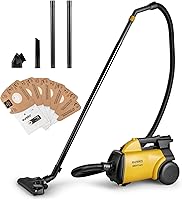
What Is a Canister Vacuum and How Does It Work?
A canister vacuum is a vacuum with a separate wheeled body connected to a cleaning head by a hose and wand. Its motor pulls dirt into a bag or dust cup as you move the head.
On this page (7 sections)
- What is a canister vacuum made of?
- How does a canister vacuum work?
- What is the difference between bagged and bagless canisters?
- Are canister vacuums good for carpet and hard floors?
- How do you choose a canister for your rooms?
- How do you set up and care for a canister vacuum?
- Which canister vacuum setup should you choose?
A canister vacuum is a vacuum with a separate wheeled body, connected to a cleaning head by a flexible hose and wand. The body holds the motor, filters, and dust container, while you guide the head across the floor.
Understanding what a canister vacuum is helps you choose by floor type and daily routine. The separate wand is useful around furniture, but you'll also need room to pull and store the body.
For an overview of the main buying options, start with our guide to canister vacuums and which one to buy.
What is a canister vacuum made of?
A canister vacuum has a motor body, hose, wand, cleaning head, and dust container. Small attachments let you use the same machine on surfaces beyond the floor.
The body stays on the floor during normal use. A fixed or telescoping wand extends your reach, while the hose lets you change direction without lifting the motor with each stroke.
A crevice tool reaches narrow gaps beside cushions and baseboards. A dusting brush suits suitable shelves and trim, while an upholstery tool gives you a wider opening for fabric furniture.
Storage needs include the whole setup, not just the body. Leave space for the hose to curve without a sharp bend and for the wand to sit securely.
How does a canister vacuum work?
A canister vacuum draws air and debris through the head, wand, and hose into a bag or dust cup. Filters capture dust as air passes through the machine and exits.
A suction-only floor head relies on airflow. A turbo brush uses that airflow to turn a brush, while an electric powerhead uses a motor to drive its brush roll.
That difference matters more for carpet than motor wattage alone. Watts and amps describe electrical input; they aren't a simple ranking of cleaning ability across different vacuums.
A blocked hose, full container, or clogged filter can reduce airflow. Before assuming the machine needs replacing, check those common restrictions with the vacuum switched off and unplugged.
See what a powerhead does on a canister vacuum if carpet cleaning is your main concern.
What is the difference between bagged and bagless canisters?
Bagged canisters collect debris in a replaceable bag, while bagless models use a reusable dust cup. Choose based on the emptying and care routine you'll keep up with.
Bags let you remove collected debris as one package, though you need the correct replacements on hand. Bagless cups avoid that supply need but expose loose dust during emptying and require regular cleaning.
Neither design removes the need to maintain filters. Follow the model's instructions because some filters are washable and others need replacement.
The Eureka 3670M suits readers who want a light bagged body for carrying between cleaning jobs. It weighs 8.6 lb and holds up to 2.5 liters in its dust bag.
Choose it for a bagged routine and portable cleaning around furniture or stairs. Skip it if your main requirement is a motorized carpet head or pet brush; those are different buying priorities.
The Eureka NEN110A Whirlwind suits readers who prefer cup emptying and are willing to wash filters. Its integrated crevice tool converts to a dusting brush, keeping those small tools close during room cleaning.
Automatic cord rewind helps with putting it away after a quick cleanup. Skip it if emptying loose dust or waiting for washed filters to dry would make you put off maintenance.
For more help choosing your routine, read bagged vs bagless canister vacuum.
Are canister vacuums good for carpet and hard floors?
Canister vacuums can clean both, but the included floor head must match your surfaces. Start with the floor you clean most, then consider rugs and furniture.
For hard floors, choose a suitable brush or floor setting and keep the head's underside free of grit. On delicate finishes, follow the flooring maker's care guidance before using a rotating brush.
Carpet adds another requirement: the head must move through the pile while keeping airflow. If it sticks, reduce suction or adjust the head as instructed rather than forcing it across the fibers.
Thick carpet, large carpeted rooms, and embedded hair deserve a closer look at powered brush options. Our guide to whether canister vacuums are good for carpet explains the tradeoffs.
The Miele C1 Pure Suction fits homes centered on hard floors and low-pile carpet. Its 6 suction settings let you adjust suction for the surface rather than using maximum power everywhere.
Choose it when those surfaces describe most of your home. Skip it as your default choice for thick carpet or brush-driven carpet cleaning, and compare those needs before buying.
The Kenmore 81615 suits homes that need floor tools plus a motorized attachment for pet hair. It includes 2 floor nozzles, a Pop-N-Go floor brush, and a bare-floor tool.
Kenmore says the Pet PowerMate lifts stubborn pet hair and dirt from surfaces. Choose this model if switching tools for floors and furniture fits your routine; skip it if you want a simpler setup for mostly bare floors.
Don't confuse a motorized pet attachment with a full-width floor powerhead. For fur on sofas and rugs, compare tool types in our guide to canister vacuums for pet hair.
How do you choose a canister for your rooms?
Choose by floor head, carrying needs, dust handling, and storage space. These details determine whether the vacuum fits your home after the first cleanup.
Make a short room list before comparing models. Note your main flooring, any thick rugs, stairs, furniture fabrics, and the surfaces where pet hair gathers.
Then match each job to an included tool. A long accessory list is less useful than having the right floor head and the 2 or 3 attachments you'll use regularly.
What is a canister vacuum like to use in small rooms?
A canister lets you move a light wand around chair legs while the main body stays nearby. In tight rooms, though, you must reposition the body so the hose doesn't catch on furniture.
Think through your route from the outlet to the far corner. A room with many chairs or narrow passages can require more repositioning than an open room.
If you often carry the vacuum upstairs, consider the assembled load and where you'll set it down. Keep the body on a stable surface rather than balancing it where it could fall.
Our guide to vacuuming stairs with a canister explains how to plan that job safely.
Which details deserve a final check before buying?
Check included heads, replacement supplies, and storage fit before making the final choice. Brand name and motor size won't answer those practical questions.
- Floor compatibility: Match the head to your carpet pile and hard-floor care instructions.
- Routine supplies: Find the correct bags and filters, and check which parts can be washed.
- Reach: Consider outlet placement and the path around furniture, not just wand length.
- Storage: Allow room for the body, hose, wand, and loose tools.
- Carrying: Decide how often you'll lift the machine rather than roll it.
How do you set up and care for a canister vacuum?
Start with secure connections, correctly fitted filters, and the right attachment. A loose hose or poorly seated bag can interrupt cleaning before you reach the first room.
With the machine unplugged, check that the dust container is seated and the hose and wand connections are secure. Set the wand to a comfortable length so you can guide the head without hunching.
Choose the floor setting before starting. Use slow, overlapping passes, and lower suction if the head pulls too hard on a rug or suitable fabric.
Move the body closer when the hose reaches its limit. Tugging on the hose to drag it around corners can strain connections and knock the body into furniture.
After cleaning, check the cup or bag and remove hair or thread from brush rolls as instructed. Unplug the machine before clearing a blockage or working near a rotating brush.
Wash only parts identified as washable and let them dry fully before reinstalling them. Avoid collecting liquids, hot ash, or fine construction dust unless the vacuum is designed for that job.
Which canister vacuum setup should you choose?
If you're deciding what a canister vacuum is right for in your home, use your main cleaning job as the deciding factor. Settle the floor-head requirement first, then choose the dust system and tools.
Pick the Eureka 3670M for light carrying and bagged cleanup, or the Whirlwind if you prefer a reusable cup and filter washing. Choose the Miele C1 Pure Suction for hard floors and low-pile carpet with adjustable suction.
Consider the Kenmore 81615 when pet hair tools and switching between surfaces matter. If thick carpet dominates your home, make the floor powerhead your first requirement.
Use our canister vacuum buying guide to narrow the options once you've matched the setup to your floors and routine.
Frequently asked questions
What is a canister vacuum used for?
A canister vacuum cleans floors, stairs, furniture, and narrow spaces with a separate body connected to a hose and wand. Change the attachment to match the job, such as an upholstery tool for a sofa or a crevice tool for gaps, and choose a floor head suited to your flooring.
How does a canister vacuum work?
A motor draws air and debris through the cleaning head, wand, and hose into a bag or dust cup. Filters capture dust before air leaves the body, while a motorized floor head adds a rotating brush to loosen debris from carpet fibers.
Is a canister vacuum better than an upright?
A canister is a good fit for mixed surfaces, furniture, and cleaning with attachments because the wand moves separately from the motor body. An upright may suit you better if you mainly clean open carpeted rooms and prefer moving one unit rather than managing a trailing hose and body.
Should I choose a bagged or bagless canister vacuum?
Choose bagged if you prefer removing a filled bag instead of tipping loose debris into a trash can. Choose bagless if you want to avoid replacement bags and will empty the cup and clean its filters regularly, following the instructions for washing and drying each part.