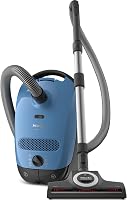
How to Vacuum Stairs With a Canister Vacuum
Choose a canister vacuum for stairs around secure placement, useful reach, and a tool suited to your steps. Clean from the top down where practical, keeping the body stable and the hose and cord clear of your feet.
On this page (8 sections)
- How do you choose a canister vacuum for stairs?
- Which of these canister vacuums suits your staircase?
- Where should you put the canister before cleaning?
- Which attachment should you use on carpeted stairs?
- How do you clean wood or other hard stairs?
- Which stair-cleaning mistakes should you avoid?
- How should you care for the vacuum after stair cleaning?
- Which canister vacuum for stairs should you choose?
A canister vacuum for stairs should have manageable carrying weight, useful small tools, and enough reach from a secure landing. Clean from the top down where practical, keeping the body stable and the hose and cord away from your feet.
Choose around your staircase first, then the rest of your home. Narrow treads, a tight turn, or no middle landing can matter more than motor power.
How do you choose a canister vacuum for stairs?
Start with where the body will sit and how you'll move it. A model that suits a wide landing may be awkward on a winding staircase with little floor space.
Check these points before choosing:
- Placement: Allow space for the body away from the landing edge and walking route.
- Carrying weight: Consider every trip between floors, including where you'll store the vacuum.
- Working reach: You need hose slack while using the attachment, not just enough length to touch the farthest step.
- Tool size: The attachment should fit the tread and reach corners without hanging over the edge.
- Dust handling: Bags mean replacement supplies; a dust cup needs emptying and filter care.
Don't confuse cord length, wand length, and hose reach. A longer cord helps you reach an outlet, while an extended wand can become awkward when cleaning the step directly in front of you.
Our guide to what a canister vacuum is and how it works explains the separate body, hose, and cleaning head. For choosing one vacuum for stairs and rooms, start with our canister vacuum guide.
Which of these canister vacuums suits your staircase?
Choose among these models by carrying needs, dust handling, and tool access. Each fits a different routine, and the heaviest option needs particular care when planning moves between landings.
Kenmore 81414: for stairs alongside whole-home cleaning
The Kenmore 81414 suits a home where the vacuum also needs to cover carpet, upholstery, and hard floors. Its detachable handle lets you work close to a tread without always using the extended wand.
Its 22.6 lb weight makes it a better fit when you can leave the body securely positioned for each section. Skip it if carrying the vacuum between floors is your main concern.
Kenmore describes its HEPA filtration system as having a completely sealed air path. The bagged design also suits readers who prefer replacing a bag to emptying loose dust from a cup.
The variable suction control helps you adjust airflow for different surfaces. Use that adjustment if an attachment grips too firmly, rather than dragging it across the step.
Eureka 3670M: for carrying between floors
The Eureka 3670M suits readers who want a lighter bagged body for moving between cleaning spots. Its included extension wands also make it useful for jobs beyond the staircase.
Remove unneeded wand sections when working close to a tread, provided the attachment connection allows it. A shorter setup gives you more room to guide the nozzle around the tread-to-riser joint.
Choose it if carrying ease and replaceable bags are priorities. Skip it if you specifically want the Kenmore's sealed HEPA system or the Whirlwind's bagless dust handling.
Bissell Zing 2154A: for frequent moves and mixed surfaces
The Bissell Zing 2154A suits a staircase routine that involves frequent repositioning. It's the lightest of these 4 models, and its suction adjustment is useful when switching between rugs and above-floor work.
The carpet-to-hard-floor switch can help when your stairs and landing have different surfaces. Check attachment suitability for the finish before moving from one to the other.
Its washable pre-motor and post-motor filters need care alongside bag replacement. Skip it if you want bagless collection, and don't choose by weight alone if the available landing space or attachment fit is wrong.
Eureka NEN110A Whirlwind: for bagless cleaning and stair corners
The Eureka NEN110A Whirlwind suits readers who want bagless collection and quick access to small tools. The handle's integrated attachment is useful when you alternate between open tread surfaces and tight edges.
Its body weighs about 8.2 lb, and the dust cup has a 1-button release. Choose it if you're comfortable emptying collected dirt and caring for washable filters.
Skip it if containing debris in a replaceable bag is a priority. Our bagged vs. bagless canister comparison explains that choice, while our lightweight canister vacuum guide helps compare carrying needs.
Where should you put the canister before cleaning?
Put the canister on a level landing or nearby floor, away from the stair edge. Leave enough room to stand and move without stepping over the hose.
Don't balance the body on a tread or hold it by the hose. If no secure location reaches the next section, stop and use equipment better suited to that space.
- Remove shoes, toys, and loose objects from the stairs.
- Check the bag or dust cup and make sure the hose is clear.
- Attach the tool securely before switching on.
- Route the cord away from your walking path.
- Check comfortable reach with the vacuum off.
Plan separate upper and lower sections when one position won't cover the flight. Switch off before moving the body, and unplug before changing outlets.
Which attachment should you use on carpeted stairs?
Use a small carpet-suitable attachment that you can control across the full tread. An upholstery tool can be practical if the vacuum instructions approve it for that surface.
Start at the back of the tread and make short, overlapping passes toward the front. Clean the riser with a suitable smaller tool, then use the crevice tool along the corners and seams.
For hair caught in carpet, repeated slow passes are more useful than pressing hard on the nozzle. If suction pins the tool to the surface, reduce it where the vacuum allows.
Does a canister vacuum for carpeted stairs need a powerhead?
A powerhead makes sense only when the carpet and vacuum instructions allow it, and the head fits the step. A large floor head can be difficult to control on narrow treads.
Don't assume a vacuum's carpet suitability means every attachment is right for stairs. Our guide to canister vacuums for carpet explains how carpet type and cleaning heads affect the choice.
How do you clean wood or other hard stairs?
Use a bare-floor tool or soft brush approved for the finish. Check its underside for grit before placing it on the step.
Pick up debris that's too large for the nozzle, then vacuum the tread with light, controlled passes. Use a suitable narrow tool for edges without scraping it along the finish.
Don't drag the hose across sharp stair nosings or pull it around a tight turn. Reposition the setup when friction starts to move the body or makes the tool harder to guide.
Which stair-cleaning mistakes should you avoid?
Avoid overreaching, rushing corners, and using the wrong head. These mistakes create more trouble than choosing a slightly smaller dust bag or cup.
- Pulling the body closer with the hose: Stop and move the switched-off canister by its handle.
- Using the full wand everywhere: Shorten the setup for close work when the connections allow it.
- Forcing a wide floor head onto a narrow tread: Change to an approved smaller attachment.
- Chasing debris beyond comfortable reach: Save that step for the next secure position.
- Leaving the cord behind your feet: Check its route whenever you change position.
Top-down cleaning helps collect falling debris, but it shouldn't force an unstable setup. Keep a clear route to the landing throughout the job.
How should you care for the vacuum after stair cleaning?
Switch off and unplug the vacuum, then clear the attachment and check the collection system. Hair and threads left around a brush can interfere with the next cleaning session.
Replace bags and empty dust cups according to the vacuum's instructions. If suction drops, check for a full container, a blocked tool, or a clogged hose before making more passes.
Clean filters on the manufacturer's schedule. Reinstall washable filters only when fully dry, and don't wash a filter unless its care instructions allow it.
Store the hose without tight kinks and put the cord away. Guide a retracting plug so it doesn't swing against the stairs or furniture.
Which canister vacuum for stairs should you choose?
Choose the Bissell Zing for the lowest carrying weight here, or the Eureka 3670M if you prefer its bagged setup and extension wands. Pick the Whirlwind if you want bagless collection and integrated corner tools.
Choose the Kenmore 81414 when its detachable handle and sealed HEPA system suit your whole-home needs, and you can manage the heavier body. Rule it out if frequent carrying is the part of stair cleaning you most want to improve.
A canister vacuum for stairs is a good fit only when its body can stay secure while you work. If your staircase lacks usable landing space, compare other layouts in canister vs. upright vacuum for stairs before choosing.
Frequently asked questions
How do you vacuum stairs with a canister vacuum?
Keep the canister on a stable, level landing or nearby floor, then clean the steps within comfortable reach. Work from the top down where practical, using a surface-safe tool for treads and a smaller attachment for edges; switch off before moving the body, and keep the hose and cord away from your footing.
Is a canister vacuum safe to use on stairs?
A canister vacuum needs secure placement and enough hose slack to avoid pulling its body toward the steps. Keep it away from the landing edge and never balance it on a narrow tread or lift it by the hose; choose another vacuum if your staircase offers no stable place within reach.
Which vacuum attachment should you use on stairs?
Use a small upholstery or stair tool approved for carpet, or a bare-floor tool approved for your hard stair finish. A crevice tool reaches the joint between tread and riser; check the vacuum instructions before using a powered head, and avoid any attachment too wide to sit securely on the tread.
Should you vacuum stairs from the top or bottom?
Clean from the top down where practical so loosened debris falls toward steps you haven't finished. Secure placement matters more than direction, so divide the staircase into sections if needed; stop and move the switched-off canister between sections instead of stretching the hose or leaning to reach one more step.