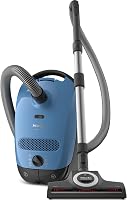
What Is a Powerhead on a Canister Vacuum?
A canister vacuum with a powerhead uses a separate motor to turn its floor brush, loosening debris from carpet while suction carries it away. Choose one when your carpet allows rotating brushes; use a suitable hard-floor head for smooth surfaces.
On this page (8 sections)
- What does a powerhead do on a canister vacuum?
- How is a powerhead different from a turbo brush?
- Is a powerhead useful on carpet and hard floors?
- How do you choose a canister vacuum with powerhead?
- Which brush-equipped canister suits your home?
- How do you set up and use a powerhead?
- What care keeps the brushhead working?
- Which canister vacuum with powerhead should you choose?
A canister vacuum with a powerhead uses a motor-driven brushroll to loosen debris from carpet while suction carries it into the canister. Choose one when your carpet allows rotating brushes and you want agitation that doesn't rely on airflow to spin the brush.
The key is buying the right floorhead, not just a vacuum with strong suction. A turbo brush also rotates, but it works differently and isn't an electric powerhead.
What does a powerhead do on a canister vacuum?
A powerhead brushes carpet fibers while the vacuum collects loosened dirt. Its separate motor drives the brushroll as you move the nozzle across the floor.
The canister holds the main suction motor and dust container, leaving you to guide the wand and head. See what a canister vacuum is and how it works for the full layout.
Brush agitation is useful for debris caught among carpet fibers, but stronger brushing isn't always appropriate. Carpet construction and care instructions matter as much as pile height.
How is a powerhead different from a turbo brush?
An electric powerhead uses its own motor, while a turbo brush uses the vacuum's airflow to turn a turbine and brushroll. A suction-only floorhead has no powered rotating brush.
Airflow restrictions can slow a turbo brush because the same air stream helps drive it. An electric brush has a separate drive, although blocked airflow still reduces the vacuum's ability to collect dirt.
Don't use suction settings as proof of brush control. A dial that changes suction doesn't necessarily change brush speed or stop the brushroll.
The Miele turbo models below are options for low- to medium-pile carpet and hard floors. They shouldn't be treated as electric-powerhead models simply because their brushes rotate.
Is a powerhead useful on carpet and hard floors?
A powerhead is mainly a carpet tool; smooth floors often need only a suitable suction nozzle. For mixed flooring, a separate hard-floor head gives you a clear way to match the tool to the surface.
A rotating brush can catch rug fringe or disturb loose edges. Keep fringe outside the head's path, and follow care instructions for delicate rugs rather than assuming all rugs tolerate brushing.
Some heads allow brush shutoff, but a stopped brush doesn't automatically make the nozzle suitable for every finish. Check the floorhead's intended use and keep its wheels and underside free of grit.
Our guide to canister vacuums for carpet covers carpet choices, while canister vacuums for hardwood floors focuses on smooth surfaces.
How do you choose a canister vacuum with powerhead?
Start with carpet compatibility and floorhead controls, then compare the canister's weight, dust collection, and tools. Extra accessories won't fix a mismatch between the brush and your main floor.
Canister vacuum powerhead connections and controls
An electric head needs a compatible powered hose and wand, not just a tube that fits. Before buying a replacement or upgrade, confirm the complete connection path for your exact vacuum model.
Look for brush shutoff if you need to stop agitation between surfaces, and check height adjustment when comparing heads for different carpet piles. Don't assume either feature is included unless it is stated.
Carrying, emptying, and storage
Choose a dust system you'll maintain regularly. Bagged models require replacement bags, while bagless models require emptying and care of the dust cup and filters.
Our bagged versus bagless canister vacuum guide explains those chores. If you carry the vacuum upstairs often, also weigh the whole setup, including the wand and head, rather than focusing only on floor performance.
Check where the assembled vacuum will live. A storage space needs room for the body, hose, wand, and spare floorhead without sharply bending the hose.
Which brush-equipped canister suits your home?
The C1 Turbo Team suits a bagged mixed-floor setup, while the Kenmore adds a hair-removal brushroll and bagless collection. The C3 Calima emphasizes convenient controls, and the Blizzard CX1 offers a bagless Miele alternative.
These options serve different buyers. Confirm an electric brush drive before choosing any model specifically to meet a powerhead requirement.
Miele C1 Turbo Team for hard floors and shorter carpet
The C1 Turbo Team suits homes with hard floors and low- to medium-pile carpet. It includes 6 suction settings and weighs 13 pounds, making it worth considering when carrying weight matters.
Choose it if you want bagged collection and can switch heads as you move between floor types. Skip it if your main requirement is an electric powerhead or your carpet needs a head outside its stated pile range.
Its dusting brush, crevice tool, and upholstery tool cover furniture and smaller spaces. Read our Miele C1 Turbo Team guide for a closer comparison of that setup.
Kenmore 500 Hair Eliminator for homes with shedding pets
The Kenmore suits buyers who want bagless collection and help managing hair around the brushroll. It has a 2-motor system, and Kenmore says the Hair Eliminator removes wrapped hair automatically.
The detachable handle is useful for furniture and tight spaces, while the 24-foot rewind cord simplifies storage. Its 1.2-liter dust cup makes emptying part of the routine.
Skip it if carrying weight is your main concern: it weighs 19.2 pounds. Also confirm the head's controls and carpet compatibility before choosing it for plush carpet; the motor count alone doesn't guarantee those features.
Miele Complete C3 Calima for convenient bagged cleaning
The C3 Calima suits mixed-floor homes where foot-operated suction controls and onboard tools would make cleaning easier. Its integrated accessory compartment keeps the smaller tools with the canister.
The Comfort Handle and One-Touch cord rewind are useful if you want fewer separate storage and control steps. It also includes a HEPA Lifetime Filter.
Choose it for those conveniences with bagged collection. Skip it if you need a motor-driven carpet head, since this configuration uses a turbobrush for low- to medium-pile carpet.
Miele Blizzard CX1 Turbo Team for bagless mixed-floor cleaning
The Blizzard CX1 suits buyers who want Miele's turbo-and-parquet head combination without replacement dust bags. It has a 2-liter dust container and 4 suction settings.
Miele's Click2Open system is designed to reduce the dust cloud during emptying. Hold the container low inside the trash receptacle rather than releasing dirt from above it.
Choose it if bagless collection fits your routine. Skip it if frequent carrying is central to your cleaning route, given its 19-pound weight, or if you specifically need an electric powerhead.
For more options, use our best canister vacuum with a powerhead guide and compare drive types before extra features.
How do you set up and use a powerhead?
Fit the head securely and select settings for the floor before starting. With the vacuum unplugged, connect the hose, wand, and nozzle as the manual directs, checking that each connection locks.
Adjust the wand so you can guide the head without hunching. Clear cords, small toys, and loose fabric from the route before turning on the brush.
Start with the recommended suction and height settings, then check that the nozzle moves freely. If it seals tightly to a rug or becomes hard to push, stop and adjust rather than forcing it.
Use slow, overlapping passes so the head has time to brush and collect debris. Don't leave a running brush parked on one spot, and switch off before changing attachments.
On stairs, keep the canister on a stable surface and work within easy reach. Our guide to vacuuming stairs with a canister vacuum explains positioning and tool choice.
What care keeps the brushhead working?
Keep the air path clear and inspect the brushroll regularly. Unplug the vacuum before checking the nozzle, removing tangled material, or opening any access panel.
Empty the cup or replace the bag as directed, and follow the manual's filter schedule. Don't wash a filter unless its care instructions allow it, and let washable parts dry fully before refitting.
Hair-removal features don't replace checks for string, cords, or blocked openings. Use only the cleaning method allowed for that brushroll, especially around bristles and end caps.
If pickup drops or the head stops turning, switch off before investigating. Check for obstructions and consult the manual's reset steps rather than repeatedly restarting a jammed brush.
Which canister vacuum with powerhead should you choose?
Choose a canister vacuum with a powerhead when your carpet permits brushing and you need an electric brush drive. Confirm compatibility, brush controls, and the included head before ordering.
For hard floors with low- to medium-pile carpet, the turbo models offer useful alternatives: choose C1 for its lighter stated weight, C3 Calima for onboard convenience, or Blizzard CX1 for bagless collection.
Consider the Kenmore when wrapped hair is a recurring chore and its carrying weight suits you. For help weighing the rest of the machine, start with our guide to canister vacuums.
Frequently asked questions
What does a powerhead do on a canister vacuum?
A powerhead uses a separate motor to turn a brushroll, loosening debris from carpet fibers while suction carries it into the canister. It suits carpet that allows rotating brushes, but the correct head and settings depend on pile height and the carpet maker's care instructions.
Is a powerhead the same as a turbo brush?
No, a powerhead uses an electric motor to drive its brushroll, while a turbo brush uses airflow to spin the brush. Both provide agitation, but they need different connections and can suit different carpets, so confirm the drive type and floor compatibility before buying a vacuum or replacement head.
Do you need a powerhead for hard floors?
Usually, you don't need a powerhead for hard floors because a suitable suction nozzle can collect loose debris without brushing carpet fibers. A separate hard-floor head is a practical choice for mixed flooring; follow your floor's care instructions and keep the nozzle's underside free of grit.
Can you add a powerhead to any canister vacuum?
No, an electric powerhead needs a compatible electrical connection through the vacuum's hose and wand, so a matching tube diameter isn't enough. Confirm the exact vacuum model, hose, wand, and head combination before buying parts; a suction-only setup may not support an electric floorhead at all.