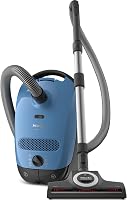
Does Dyson Make a Canister Vacuum?
Yes, the Dyson Big Ball Multi Floor is a bagless Dyson canister vacuum. Choose it for bin emptying and a turbine head, or consider Miele and Kenmore for bagged alternatives with different tools.
On this page (7 sections)
- Does Dyson make a canister vacuum?
- Is the Dyson Big Ball Multi Floor bagged or bagless?
- How does the Dyson compare with other canister vacuums?
- What should you check before buying a Dyson canister?
- How should you set up and use a canister vacuum?
- Which mistakes should Dyson buyers avoid?
- Should you choose a Dyson canister vacuum?
Yes, the Dyson Big Ball Multi Floor is a bagless Dyson canister vacuum, with a separate wheeled body connected to its cleaning head by a hose and wand. It suits buyers who want to empty a bin rather than replace dust bags.
Choose between it and a bagged alternative by looking at your floors, your furniture tools, and how you want to handle collected dust. Miele's C1 Turbo Team and Kenmore's 81615 offer different reasons to move away from Dyson, especially for buyers who prefer bags.
Does Dyson make a canister vacuum?
Yes, the Big Ball Multi Floor is a Dyson canister model. Its separate body lets you guide the floorhead while the canister follows behind.
Dyson says the Big Ball body rights itself when it tips over. That feature suits buyers who dislike stopping to stand a tipped canister back up, though you should still guide the body around furniture legs and thresholds.
The cleaning head combines carbon fiber filaments and stiff nylon bristles. Dyson says these target fine dust and ground-in dirt, respectively.
The included smaller tools give you options beyond open floors. Switch tools for steps and narrow areas rather than trying to fit the main floorhead everywhere.
For a closer look at the separate body, hose, and wand arrangement, see what a canister vacuum is and how it works.
Is the Dyson Big Ball Multi Floor bagged or bagless?
The Big Ball Multi Floor is bagless, so its emptying routine is a key reason to choose or skip it. Dyson says its dirt ejector pushes trapped dust and debris out without you needing to touch the dirt.
That mechanism doesn't remove the need to handle the bin or clean up a spill. Empty it close to the bottom of a trash bag, keep your face away from the opening, and avoid shaking dust out from above the bin.
Bagless suits someone who wants to avoid keeping replacement bags on hand and doesn't mind regular bin care. Skip it if handling loose dust is the part of vacuuming you most want to avoid.
A bagged canister collects debris in a replaceable bag, giving you a different disposal routine. Our bagged vs. bagless canister vacuum guide explains that choice in more detail.
Dyson canister vacuum filter care
The Dyson has a non-washable post-motor filter, so don't rinse that part. Follow the model's instructions for every other filter and removable component rather than treating all parts alike.
Unplug the vacuum before clearing a blockage or removing tangled hair. If the instructions permit washing another part, let it dry fully before putting it back.
Empty the bin before debris reaches its fill limit. Waiting until the container is packed makes disposal harder and can leave dirt lodged where air needs to pass.
How does the Dyson compare with other canister vacuums?
Choose Dyson for its bagless routine, Miele for hard floors and low- to medium-pile carpet, or Kenmore for its motorized pet-hair attachment. These are different tool packages, so start with the cleaning job you repeat most often.
Miele C1 Turbo Team for mixed floors
The Miele C1 Turbo Team pairs a TurboTeQ floorhead for low- to medium-pile carpet with a parquet floorhead for hard floors. Its 6 suction settings let you adjust suction to the surface.
Buy the Miele if you have hard floors, ordinary rugs, and a preference for bagged disposal. Its dusting brush, crevice tool, and upholstery tool also cover common furniture and edge-cleaning jobs.
The three-tier AirClean system combines a FilterBag, motor protection filter, and exhaust filter. Keep the correct replacement bags and filters available so routine care doesn't become a reason to delay cleaning.
Skip this model if your main need is a motorized pet-hair tool or a head specifically suited to demanding carpet. Its stated floor fit is hard floors and low- to medium-pile carpet, so don't stretch that into a promise for every rug.
Kenmore 81615 for pet-hair chores
The Kenmore 81615 makes sense when pet hair on furniture is a frequent job. It includes a motorized Pet PowerMate attachment, 2 floor nozzles, and a triple HEPA filter system.
Choose it if you want bagged disposal and dedicated tools for moving between floors, upholstery, and tight spaces. Its onboard tool storage helps keep attachments available as you work.
The carpet setup has 4 height settings. Follow the instructions when adjusting the head rather than assuming the lowest setting will clean every carpet best.
Skip the Kenmore if you want a simple bagless routine or rarely use furniture attachments. A broader tool set is useful only if it matches your regular chores.
For more choices within each disposal style, compare our guides to bagless canister vacuums and bagged canister vacuums.
What should you check before buying a Dyson canister?
Check floorhead compatibility, carrying needs, storage, and noise before choosing the Dyson. A useful attachment package won't help if the machine is awkward to move between the rooms you clean.
Start with your most demanding floor, not the easiest one. A home with mostly wood and one thick rug still needs a cleaning plan for that rug.
Check your carpet or rug care instructions for limits on rotating brushes. Long fibers, fringe, and loose rug edges need particular care because they can catch in a moving brush.
A turbine head uses airflow to turn its brush, while an electric powerhead has a motor to drive it. If carpet is your main concern, our guide to what a powerhead does on a canister vacuum explains the difference.
The Dyson weighs 8 kg, so think through any route that involves carrying it upstairs. The hose helps you reach, but it doesn't replace a safe place to set the body.
Measure your storage space with the hose and wand in mind. A cupboard that fits the canister alone may still leave you winding the hose too tightly or balancing tools against the door.
The Dyson's stated noise level is 78 dB. If quiet cleaning is a priority, don't choose it solely for its shape or brand.
For help matching the format to your home, read canister vacuums: what they are and which one to buy. Our guide to Shark canister vacuum options covers another brand you may be considering.
How should you set up and use a canister vacuum?
Connect the hose, wand, and correct tool securely, then check that the dust container and filters are seated properly. Start with a clear airflow path before turning the vacuum on.
On the first clean, work through a small area with each tool you expect to use. Check that the head moves freely and doesn't pull at rug edges before continuing across the room.
Use slow, overlapping passes on carpet rather than rushing the head back and forth. On hard floors, remove objects large enough to jam the head before vacuuming.
Keep the hose in a gentle curve and move the body closer when it catches behind furniture. Pulling harder can strain the hose connection or drag the canister into a table leg.
On stairs, place the canister on a stable surface and work within comfortable reach. Never balance it on a narrow step or pull it upward by the hose; see how to vacuum stairs with a canister vacuum for a fuller method.
Which mistakes should Dyson buyers avoid?
Avoid choosing by brand alone, overfilling the bin, and using the wrong head on a rug. These mistakes can turn an otherwise suitable canister into extra work.
Don't treat the self-righting body as permission to pull the Dyson over obstacles. Guide it around cords and furniture, and lift it by its handle when the route requires carrying.
Don't keep vacuuming when pickup drops sharply or the sound changes. Switch off, unplug, and check the bin, head, hose, and filters according to the instructions before continuing.
Leave wet spills, hot ash, and renovation debris to equipment designed for those jobs. Fine building dust can demand a different collection and filtration setup from ordinary household cleaning.
Finally, plan for the whole care routine. Bagless models need bin care, while bagged models need replacement bags; either choice still needs clear tools and correctly maintained filters.
Should you choose a Dyson canister vacuum?
Choose the Dyson Big Ball Multi Floor if bagless disposal is your preference and its turbine head matches your floors. Skip it if you want to avoid emptying loose dust or regularly carry a vacuum between levels and find its weight unsuitable.
Pick the Miele C1 Turbo Team for a bagged setup centered on hard floors and low- to medium-pile carpet. Choose the Kenmore 81615 when a motorized pet-hair attachment addresses a regular furniture-cleaning job.
Before ordering a Dyson canister vacuum, confirm the exact model and included tools. Then use our canister vacuum guide to check that the format fits your rooms, storage space, and cleaning routine.
Frequently asked questions
Does Dyson still make canister vacuums?
The Dyson Big Ball Multi Floor is a Dyson canister vacuum, but its existence doesn't confirm ongoing production; if current production matters to your choice, confirm that with Dyson before ordering. Choose the exact model by its floorhead, included tools, and care needs rather than the brand name alone.
Is the Dyson Big Ball Multi Floor bagged or bagless?
The Dyson Big Ball Multi Floor is bagless, so you empty a dust bin rather than replace a bag; Dyson says its dirt ejector pushes trapped debris out during emptying. Choose a bagged alternative if you would rather remove a filled bag than empty loose dust into the trash.
Is a Dyson canister vacuum good for carpet?
The Big Ball Multi Floor has a turbine head with nylon bristles that Dyson says remove ground-in dirt; match that head to your carpet's care directions before buying, especially for deep pile or delicate rugs. Don't assume a turbine head is interchangeable with an electrically powered carpet head.
What is the difference between a canister and an upright vacuum?
A canister vacuum has a separate body connected to the floorhead by a hose and wand, while an upright keeps the main body over the head; a canister lets you move the cleaning tool separately from the motor housing. Allow storage space for its body, hose, wand, and attachments.