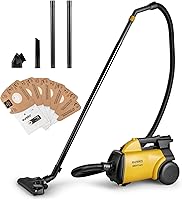
How to Choose a Small Canister Vacuum
The best small canister vacuum for most homes is a compact bagged model with a long hose and a switchable floorhead. Measure your closet and doorway first, then pick bagged for filtration or bagless for no supplies to buy.
On this page (9 sections)
- How big is a small canister vacuum, and what size fits your closet?
- How much should a compact canister weigh for stairs and daily use?
- Bagged or bagless: which suits a small home?
- What hose length and cord reach do you need in a small home?
- Which floorhead works on your floors and carpet?
- What do the suction ratings and noise levels tell you?
- Which compact canister fits how you clean?
- How should you compare small canister vacuums before buying?
- What is the best small canister vacuum for your home?
The best small canister vacuum for most homes is a compact bagged model with a long hose and a switchable floorhead. Measure your closet and doorway first, then pick bagged for filtration or bagless for no supplies to buy.
Small canisters earn their place in apartments and tight closets because the heavy motor sits in the body you pull, not in the part you push. This guide covers what actually decides the best small canister vacuum for your space, from weight and hose length to bags, floorheads and storage.
How big is a small canister vacuum, and what size fits your closet?
A small canister vacuum usually weighs under about 12 pounds and runs under 19 inches long, so it fits a shelf or a floor gap that an upright would fill. Measure the storage spot before you compare models.
The Bissell Zing 2156A weighs 7.5 pounds and measures 11.51 by 16.91 by 13.88 inches. The Miele Classic C1 weighs 12 pounds at 18.2 by 11 by 8.7 inches.
The Eureka 3670M comes in at 8.6 pounds and 17.5 by 9 by 11.3 inches.
Height matters more than length if you plan to slide the vacuum under a shelf or a counter overhang. Depth matters if it goes into a narrow closet beside a broom.
Check the doorway too. A canister that clears your closet but not the bathroom door is a daily annoyance, so run a tape measure on both before you decide.
How much should a compact canister weigh for stairs and daily use?
Aim for 8 to 12 pounds for a compact canister if you carry it between floors or lift it onto stairs. Above that, the pull gets tiring on a full flight.
The Bissell Zing stays under 8 pounds and adds an integrated carrying handle. The Eureka 3670M sits at 8.6 pounds with a liftable body.
The Miele Classic C1 is the heaviest of the three at 12 pounds, which buys it a longer hose and larger bag.
Weight is a trade-off, not a score. A lighter body often means a smaller dust capacity or a shorter cord, while a heavier body can mean longer cleaning reach between moves.
If stairs are a big part of your cleaning, see how to vacuum stairs with a canister vacuum for a technique that saves your arm.
Bagged or bagless: which suits a small home?
Pick bagged for sealed dust and less emptying; pick bagless for no bags to buy. In a small apartment, the bagged choice often wins because you empty it less often.
The Bissell Zing 2156A is bagless, with a 2 liter dirt cup, cyclonic action and washable filters. You empty the cup into the trash and rinse the filters, so there are no bags to buy or change.
The Miele Classic C1 is bagged and uses Miele's AirClean system: a genuine filter bag, a motor protection filter and an exhaust filter. The company says the room air is cleaner after vacuuming than before.
The Eureka 3670M is also bagged, with a 2.5 liter dust bag capacity. Bags seal dust inside when you swap them, which helps in small rooms where the vacuum runs close to where you sit.
What hose length and cord reach do you need in a small home?
A hose near 6 to 9 feet plus a retractable cord covers most small homes without moving the canister much. Short hoses suit tight rooms where you reposition the body anyway.
The Bissell Zing gives you a 4.67 foot hose and 15 feet of cord that retracts with a button. The Eureka 3670M lists a 1.7 foot hose and 2 extension wands.
The Miele Classic C1 lists a 3.6 yard hose, which is about 10.8 feet.
Cord length decides how many outlets you need to visit. A 15 foot cord on the Zing reaches most of a small apartment from one wall outlet.
The Miele's longer hose lets you leave the canister in a hallway and still reach into a bathroom or closet.
Wand length matters too. Two extension wands, as on the Eureka, help you reach ceilings and under beds without stretching the hose.
Which floorhead works on your floors and carpet?
A combination floorhead covers hard floors and low-pile carpet; a powered brush head is better for thick carpet. Match the head to the floors you clean most, not to the motor size.
The Miele Classic C1 ships with an SBD 365-3 combination floorhead plus a dusting brush, crevice tool and upholstery tool. Miele describes the vacuum as ideal for hard floors and low-pile carpet.
The Bissell Zing flips between carpet and hard floors with a switch. The Eureka 3670M includes a brush, crevice tool and nozzle plus two wands for furniture, high ceilings and car seats.
If most of your home is hard flooring with a few low-pile rugs, a combination head is enough. For wall-to-wall thick carpet, read what a powerhead on a canister vacuum does and compare canister vacuums for carpet before you buy.
What do the suction ratings and noise levels tell you?
Suction ratings help compare models, but floorhead fit and filtration matter just as much in a small space. Noise is the spec you notice most when cleaning near sleeping rooms.
The Bissell Zing runs a 9 amp motor with a 3-stage filter and lists an 80 db noise level. The Eureka 3670M uses a 12 amp motor and lists 90 db.
The Miele Classic C1 offers 6 suction settings and lists 64 db.
The decibel gap is real. A 64 db canister is quiet enough to run in the evening without waking the household, while a 90 db machine is noticeably louder in a small apartment.
Power alone doesn't clean better. A 12 amp motor paired with a basic floorhead can leave more behind on carpet than a lower-power unit with a better head and a sealed bag system.
Which compact canister fits how you clean?
The right pick depends on your storage, your floors and whether you want to buy bags. Here is how the three models line up for different small homes.
Eureka 3670M: best for reach and mixed surfaces
The Eureka 3670M suits small homes with a mix of carpet, stairs and furniture, thanks to its 12 amp motor and two extension wands. It weighs 8.6 pounds and carries a 2.5 liter dust bag.
The 90 db noise level is the highest here, so it suits daytime cleaning. Pick it if reach and tool variety matter more than a quiet motor.
Miele C1 Pure Suction: best for quiet cleaning and sealed dust
The Miele Classic C1 Pure Suction fits bedrooms and small apartments where quiet matters and dust stays sealed in a bag. At 64 db and 12 pounds, it is the quietest of the three.
It comes with a combination floorhead and three detail tools. Choose it if your home is mostly hard floors and low-pile carpet and you would rather swap a bag than empty a cup.
Bissell Zing 2156A: best for tight closets and bagless cleaning
The Bissell Zing 2156A suits renters and small apartments where storage is the main limit. It weighs 7.5 pounds and measures about 14 inches tall, so it slips under a shelf or beside a door.
Its cyclonic dirt cup means you handle dust each time you empty it. That is the trade-off for never buying bags.
Pick it if you want a light, compact body and don't mind rinsing filters.
How should you compare small canister vacuums before buying?
Write down your closet size, your floor types and your bag preference first, then compare only the models that pass all three. That order saves you from buying on suction alone.
Our score weighs specs, features and buyer feedback against what you're shopping for. Every product gets one badge naming the need it fits best.
Check the weight against the number of floors you carry it up. Check the floorhead against the carpet in your main room.
Check the bag type against how often you want to handle dust.
If you want the wider field, compare the best canister vacuums for more models and price tiers.
What is the best small canister vacuum for your home?
The best small canister vacuum for most readers is the Miele Classic C1 Pure Suction, because its sealed bag system and 6 suction settings handle hard floors and low-pile carpet quietly. Pick the Bissell Zing 2156A if you want bagless cleaning and the lightest body.
Pick the Eureka 3670M if you need reach and tools for stairs and upholstery.
Measure your storage gap and doorway before you order. Then match the floorhead to your main floor type and the bag type to how much dust handling you want.
A compact canister that fits your closet and your floors gets used every week. One that fights the space or the carpet tends to stay in the closet.
Frequently asked questions
What counts as a small canister vacuum?
A small canister vacuum is a pull-along cleaner whose body weighs roughly 8 to 12 pounds and measures under about 19 inches long. The motor and dust collection sit in the canister, and a hose carries suction to a wand and floorhead, so the part you push stays light.
Is a bagged or bagless canister better for small homes?
Bagged models seal dust inside a filter bag and often need less frequent emptying, which suits closets and small apartments. Bagless models such as the Bissell Zing use a washable dirt cup and cyclonic suction, so you skip buying bags but handle the dust each time you empty.
How much hose do you need on a compact canister?
A hose of about 6 to 9 feet lets you reach most rooms without dragging the canister far. Short hoses near 4 to 5 feet work best in small rooms where you move the body often, while longer hoses save effort on stairs and in wide rooms.
Do small canister vacuums work on carpet?
Many do, but the floorhead matters more than the motor size. A combination head handles hard floors and low-pile carpet, while thick or high-pile carpet cleans better with a powered brush head.
Check the floorhead type before you buy.