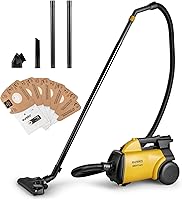
How to Clean a Hoover Canister Vacuum
To clean a Hoover canister vacuum, empty or replace the bag or dirt cup first, then wash or tap out the filters and let them dry fully. Clear the hose and brush roll, wipe the canister and tools, and reassemble only when every part is dry.
On this page (8 sections)
- Why does a Hoover canister vacuum need regular cleaning?
- What should you check before you start cleaning?
- How do you clean a bagged Hoover canister vacuum?
- How do you clean a bagless Hoover canister dirt cup?
- How do you wash or replace the filters?
- How do you clear the hose and brush roll?
- How do you wipe the canister and tools?
- How do you keep a Hoover canister vacuum clean between deep cleans?
To clean a Hoover canister vacuum, empty or replace the bag or dirt cup first, then wash or tap out the filters and let them dry fully. Clear the hose and brush roll, wipe the canister and tools, and reassemble only when every part is dry.
The order matters more than the products you use. Dust and airflow problems start at the bag and filters, so clean those first and the rest of the vacuum gets easier to check.
Why does a Hoover canister vacuum need regular cleaning?
Because dust, hair and clogged filters choke airflow, and a canister vacuum depends on steady suction to pick up dirt. Cleaning it on a schedule keeps the motor from working harder than it should.
A full bag or dirt cup leaves less room for air to move. Fine dust packs into the filters, and the hose collects hair and debris at the bends.
The result is weaker pickup, a warmer motor and dust that can escape back into the room.
Owners often notice the first sign on carpet: the vacuum skims the surface instead of lifting fibers. That's a signal to stop and clean, not to push harder.
Regular care also protects the parts you can't see, like the motor and seals.
If your vacuum already has a stale or dusty smell, the cause is usually the same buildup. Our guide to why your canister vacuum smells explains where the odor comes from and how to clear it.
What should you check before you start cleaning?
Unplug the vacuum and gather a few basic supplies before you open anything. You'll need a soft brush, a cloth, mild soap, warm water and somewhere flat for the filters to dry.
Check your model's instructions for which filters are washable and how often the maker suggests replacing the bag. Note whether your Hoover uses bags or a bagless dirt cup, since the steps differ.
Empty the dirt cup or remove the bag outdoors or over a bin to keep dust out of the room. Keep small parts like the pre-motor filter and seals together so nothing goes missing.
What supplies help with a deep clean?
A soft brush gets dust out of the brush roll and crevice tools. A slightly damp cloth handles the canister body.
A shallow tray keeps washable filters from dripping on the floor.
Never use harsh chemicals or abrasive pads on plastic housings. Mild soap and water are enough for the outside, and the inside usually needs only a wipe.
Set aside a place where filters can sit undisturbed for a full day. A drying rack or a wire cooling rack lets air reach both faces of the filter, which matters when one side is sealed against a flat surface.
Keep the tray out of direct sun and away from heaters so the media dries evenly instead of crusting on one edge.
How do you clean a bagged Hoover canister vacuum?
Slide out the old bag, check the bag housing and fit a fresh bag, then close the lid until it clicks. A bagged Hoover keeps dirt sealed, so most of the cleaning is about the bag and the filters around it.
Look inside the housing for dust that escaped a torn bag. Wipe it with a dry cloth before fitting the new bag, and check that the collar sits flat on the inlet.
A bag that looks only partly full can still block airflow if fine dust has packed the fabric. Change it when suction drops or the bag feels heavy.
Keep a spare pack on hand so you never run without one.
The bag collar is the part to inspect closely. A collar that sits crooked or catches on the housing edge leaves a small gap, and dust slips past the bag straight toward the motor.
Run a finger around the inlet after seating the bag to confirm it lies flush.
Which bags fit Hoover and Miele canisters?
Hoover bags are model-specific, so match the bag type printed on your vacuum or in its instructions. Miele canisters use their own bag families, and our guide to Kenmore canister vacuum bags covers the same matching problem for Kenmore owners.
Bag designs differ in more than shape. Sealing collars are a good example: some close automatically when you pull the bag out, while others rely on a flap or plug.
The Miele set below uses an automatic sealing collar, and the LINNIW pack uses a self-locking auto-seal collar on its replacement bags.
How do you clean a bagless Hoover canister dirt cup?
Twist the dirt cup off, empty it over a bin and rinse it if your model allows, then let it dry before refitting. Most bagless Hoovers have a release latch and a bottom-empty design.
Tap the cup against the bin to loosen packed dust, then wipe the inside with a damp cloth. Wash it with mild soap only if the instructions allow it, and dry it fully so dust doesn't turn into mud.
Check the cyclone or separator inside the lid. Hair and dust gather there, and a soft brush clears it without scratching the plastic.
Reassemble only when every part is dry.
The fill line matters on a bagless cup. Dust above the line crowds the cyclone, and the separator loses the spin that throws debris to the walls.
Empty before the cup reaches the mark rather than waiting for the motor to sound strained.
How do you wash or replace the filters?
Wash washable filters under cool water and let them air dry completely, or replace them when the maker says so. A damp filter is the most common reason a freshly cleaned vacuum loses suction.
Rinse each filter until the water runs clear, then squeeze gently and shake out the excess. Set them on a rack with airflow on all sides.
Give them at least 24 hours, longer in humid weather.
Never put filters in a dryer or on a radiator. Heat can warp the media and shrink the frame so it no longer seals.
Tap dry-only filters outside to loosen dust. Replace any filter that stays gray after cleaning or has a torn edge, since a gap lets dust reach the motor.
A canister usually carries two filters: a pre-motor filter before the motor and an exhaust filter after it. The pre-motor one catches the bulk of fine dust and needs attention more often.
The exhaust filter is the last barrier before air leaves the vacuum, so a spent one shows up as a dusty smell near the vent.
How do you clear the hose and brush roll?
Disconnect the hose and look through it toward a light, then push a clog out from the clear end with a broom handle. Clear the brush roll of hair with scissors or a seam ripper.
Check both ends of the hose and the wand for trapped debris. Hair wraps around the brush roll and slows it, so cut along the groove and pull the hair free.
Wipe the brush roll housing and check that the belt, if your model has one, sits properly. For hard flooring, compare canister vacuum cleaners for bare floors if your current model struggles on smooth surfaces.
How do you find a clog you cannot see?
Look through the hose from each end toward a light source. A bulge or a spot where light stops is the clog, and it usually sits at a bend or where the hose meets the handle.
If the hose looks clear but suction stays weak, check the wand and the floor head. Hair and grit collect in the swivel joint, and a blocked wand chokes airflow the same way a blocked hose does.
Run a broom handle through the wand before assuming the hose is at fault.
How do you wipe the canister and tools?
Wipe the outside with a damp cloth and mild soap, then dry it right away. The canister body, wheels and handle collect dust and fingerprints but rarely need more than a wipe.
Clean the crevice tool, dusting brush and upholstery tool in warm soapy water if the instructions allow it. Rinse and dry them fully before storing.
Don't immerse the canister body, cord or plug in water. Keep the cord dry and check it for damage as you wipe around the housing.
Wipe around the cord exit and the hose inlet where dust gathers. A build-up there can pull loose dust back into the airstream each time you switch on.
A dry cloth on those seams takes a few seconds and keeps the outside of the vacuum from shedding dust onto the floor.
How do you keep a Hoover canister vacuum clean between deep cleans?
Empty the dirt cup or check the bag after each heavy session and clear the brush roll whenever hair builds up. Small habits keep the vacuum from needing a full teardown.
Store the vacuum with a clean, dry bag or cup and the hose hanging free of kinks. Don't wrap the cord tightly around the housing, since sharp bends can damage it over time.
Replace filters on the schedule your model's instructions give. If you notice weak suction or a dusty smell, clean the filters and hose before assuming the motor is failing.
Our guide to the best canister vacuum can help if your Hoover is old and cleaning no longer restores its suction. For most owners, though, a proper clean of the bag, filters and hose is all it takes to get strong pickup back.
Frequently asked questions
Can you wash Hoover vacuum filters in water?
Many Hoover canister filters are washable, but read your model's instructions first. Rinse them under cool water until the water runs clear, squeeze out the excess, and let them air dry completely for at least 24 hours before putting them back.
Why does my Hoover vacuum lose suction after cleaning?
The usual causes are a damp filter, a clogged hose or a full bag. A filter that is still wet blocks airflow, so let it dry fully.
Check the hose for debris and confirm the bag or dirt cup is empty and seated correctly.
How do you clear a clog in a Hoover vacuum hose?
Disconnect the hose from the canister and look through it toward a light. Push a broom handle or long, blunt tool through the clog from the clear end.
Don't poke with anything sharp, and never clear a clog while the vacuum is plugged in.